OIML BULLETIN - 2026 - VOLUME LXVII - NUMBER 3
f o c u s p a p e r
How Saudi Arabia digitalized legal metrology at scale
The TAQYEES legal metrology program
Ali Alomar, Nawaf Alshammari, Sarah Aloufi, Ahmed Alzuwayr and Asim Almazrui
Saudi Standards, Metrology and Quality Organization (SASO) 
Citation: A.J. Alomar et al. 2026 OIML Bulletin LXVII(3) 20260309
1. Introduction
Every day, millions of small acts of trust take place unnoticed. A driver fills a tank of fuel and trusts the liter count. A family checks its water bill and trusts the meter behind the wall. A shopper buys a piece of cheese and trusts the weighing scale. These everyday actions allow people to pursue their lives with confidence, this quiet confidence proves that behind every number lies an invisible bond of trust.
For the Saudi Standards, Metrology and Quality Organization (SASO), that quiet dependence was both a mandate and a warning. As the market expanded and economy activity accelerated, the systems meant to guarantee measurement accuracy were struggling to keep pace. Verification activities were fragmented across regions, stakeholders operated independently, workflows were manual, and nationwide supervision coordination was difficult to sustain consistently.
The response came in the form of TAQYEES, the National Legal Metrology Program, established as part of Saudi Arabia's national transformation program and its Vision 2030. Its ambition went beyond issuing new regulations: TAQYEES was designed to activate legal metrology operationally, establish nationwide governance, digitally enable supervision and verification, and build a scalable ecosystem capable of supporting an entire nation's trade and market confidence. The rollout was deliberately phased: official approval and detailed planning first, followed by a pilot launch of services in Riyadh, then nationwide expansion in which licensed private-sector bodies were brought in to perform verification under SASO's supervision. The scope of regulated instruments grew alongside this expansion, extending from fuel dispensers and weighing instruments to electricity and water meters, and there are still more instrument to be regulated.
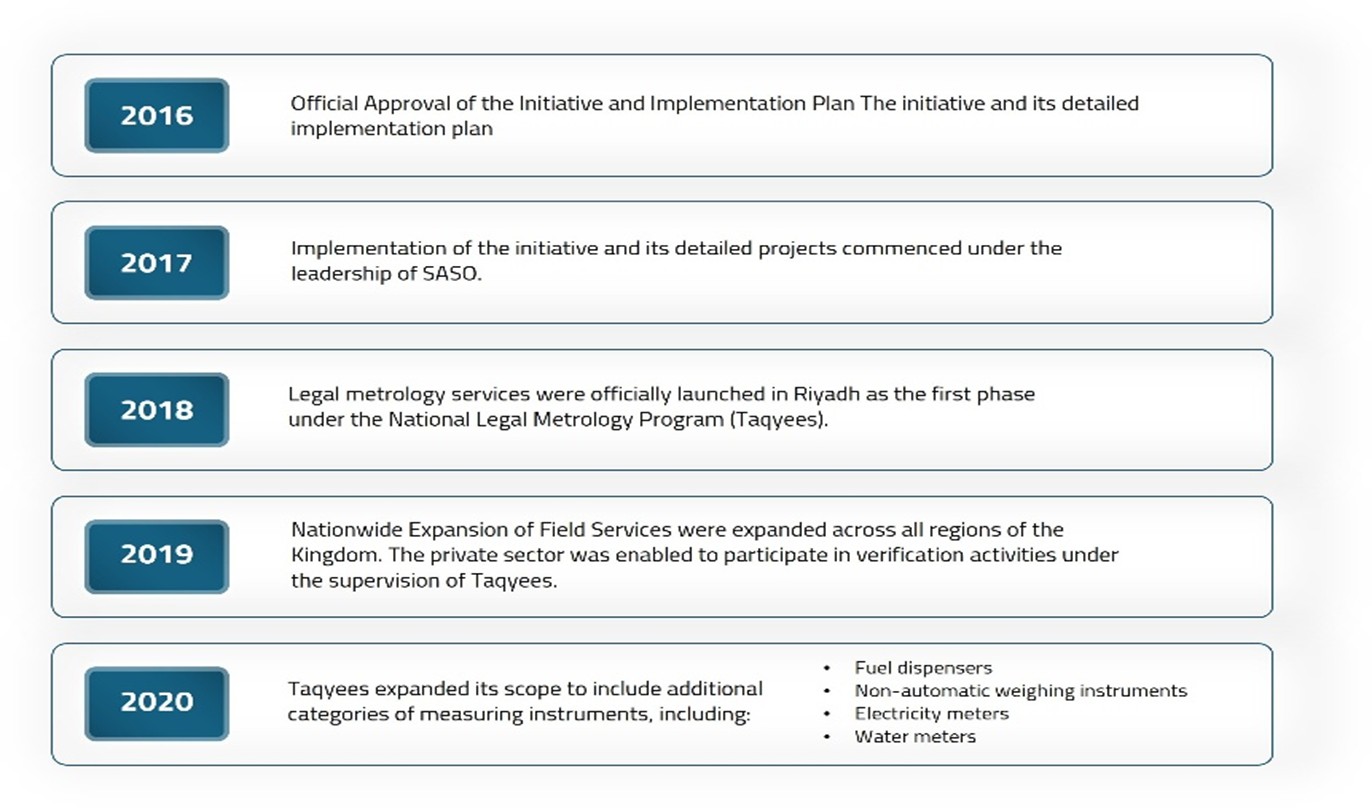
Figure 1. Development of the TAQYEES Program.
2. The TAQYEES Program
2.1 An ecosystem for legal metrology
As illustrated below, the TAQYEES Program Platform is not only a digital platform but a fully governed ecosystem connecting manufacturers, importers, verification and maintenance bodies, inspectors, regulators, and consumers within a single, traceable framework.
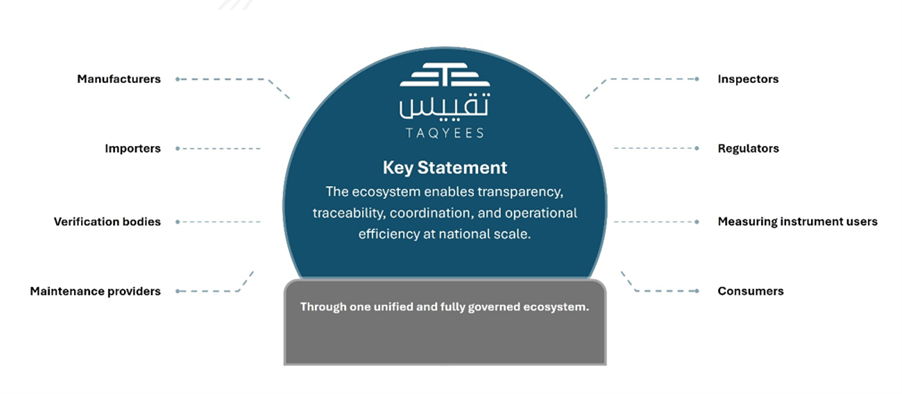
Figure 2.
One of the key strengths of the TAQYEES platform is its ability to manage the complete lifecycle of measuring instruments through a single, integrated ecosystem. Rather than treating regulatory activities as isolated processes, TAQYEES connects licensing, conformity assessment, verification, customs integration, market deployment, and ongoing regulatory control into a seamless and traceable lifecycle. The lifecycle consists of the following stages:
Licensing of Verification Bodies
Authorizing qualified verification bodies to perform legal metrology activities under a unified regulatory framework.
Type Approval
Evaluating and approving measuring instrument models to ensure compliance with applicable technical and legal metrology requirements before market entry.
Initial Verification
Verifying each instrument prior to its first use to confirm measurement accuracy, technical conformity, and readiness for commercial operation.
Customs Integration
Integrating with national customs systems to ensure that only measuring instruments holding valid type approval and initial verification certificates are permitted to enter the local market.
Market Utilization
Allowing verified instruments to be deployed in commercial use while maintaining complete digital identification and regulatory traceability.
Ongoing Verification and Maintenance
Supporting periodic verification and maintenance throughout the instrument's operational life to preserve measurement accuracy, compliance, and market confidence.
By digitally connecting every regulatory stage, TAQYEES establishes a fully traceable legal metrology ecosystem that enhances regulatory efficiency, strengthens market surveillance, and ensures that every measuring instrument remains compliant throughout its entire operational lifecycle.
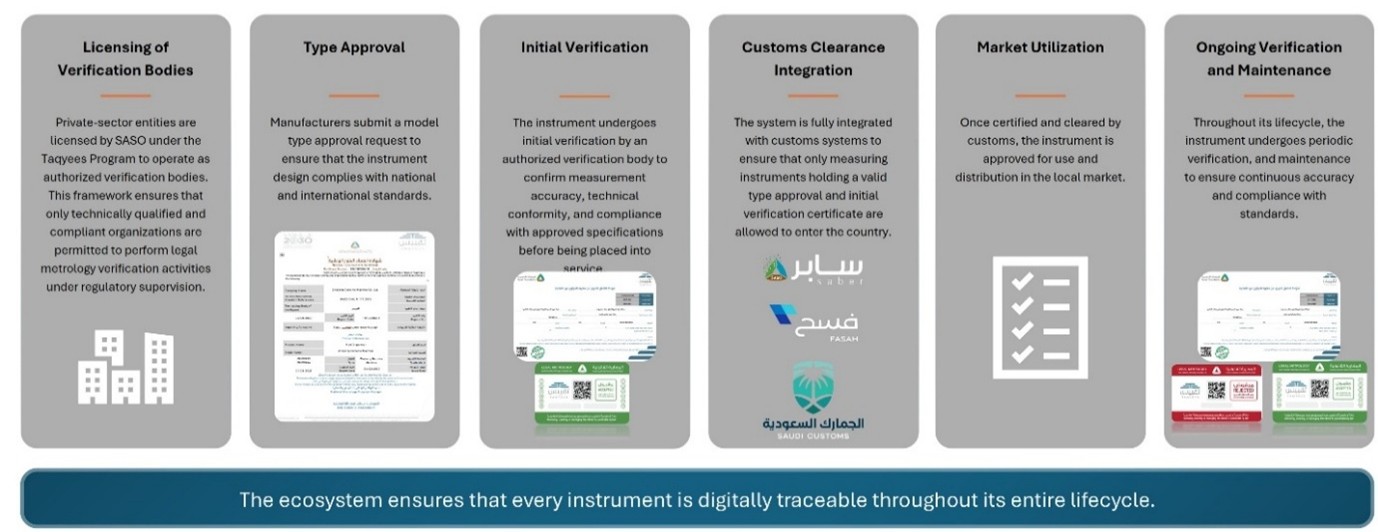
Figure 3. Each measuring instrument passes through a fully governed digital lifecycle.
2.2 Digital legal metrology services
The TAQYEES platform provides an integrated portfolio of digital legal metrology services that cover the full lifecycle of measuring instruments (Figure 3.) Through a unified and fully digital environment, the platform enables licensing, type approval, verification, maintenance control, certificate issuance, and compliance follow-up, thereby enhancing transparency, operational efficiency, and confidence in measurement results across the market.
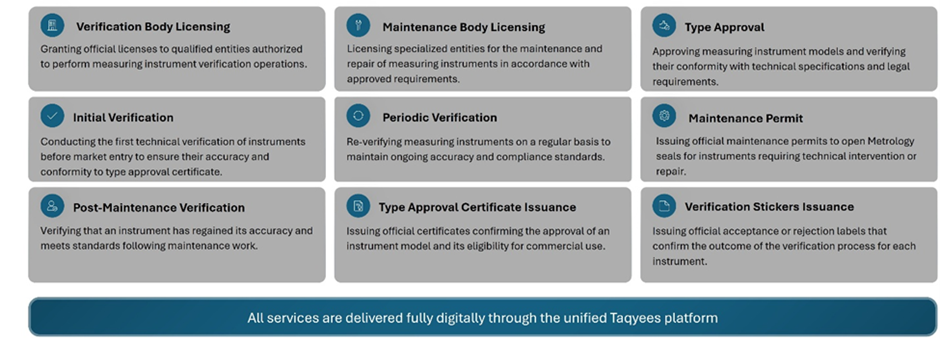
Figure 3b. The TAQYEES Platform offers an integrated suite of digital services covering the full lifecycle of measuring instruments – from licensing and type approval to verification and maintenance.
Verification Body Licensing
Licensing qualified entities to perform legal verification activities for measuring instruments in accordance with approved regulatory and technical requirements.
Maintenance Body Licensing
Licensing specialized entities to conduct maintenance and repair activities for measuring instruments, ensuring that such interventions are performed by authorized and competent bodies.
Type Approval
Assessing and approving measuring instrument models to confirm their conformity with applicable technical specifications and legal metrology requirements before use in the market.
Initial Verification
Conducting the first verification of measuring instruments before they are placed into service, ensuring their accuracy, conformity, and alignment with the approved type.
Periodic Verification
Re-verifying measuring instruments at defined intervals to maintain continued accuracy, reliability, and compliance throughout their operational lifecycle.
Maintenance Permit
Issuing official permits for authorized maintenance activities, including cases that require opening metrological seals for technical intervention or repair.
Post-Maintenance Verification
Verifying instruments after maintenance to ensure that they have restored their required accuracy and continue to meet applicable legal and technical standards.
Type Approval Certificate Issuance
Issuing official certificates confirming the approval of measuring instrument models and their eligibility for legal and commercial use.
Verification Stickers Issuance
Issuing digital and physical verification labels indicating the acceptance or rejection status of each instrument following the verification process.
2.3 Example of a Digital Service Workflow: Periodic Verification
To illustrate the end-to-end digital capabilities of the TAQYEES platform, Figure 4 presents the workflow of the Periodic Verification service. The entire process is managed through a unified digital platform, enabling seamless interaction between measuring instrument owners and licensed verification bodies while ensuring full traceability, transparency, and regulatory compliance throughout every stage of the verification lifecycle.
The workflow consists of the following steps:
Platform Registration
The instrument owner registers the organization, branches, and measuring instruments through the TAQYEES platform.
Selection of the Verification Body
The owner selects a licensed verification body from the list of authorized service providers available on the platform.
Fee Payment
Verification fees are paid electronically through the integrated digital payment system.
Appointment Scheduling
A suitable date and time for the verification visit are selected and confirmed electronically.
On-Site Verification
The licensed verification body performs the technical verification of the measuring instruments in accordance with legal metrology requirements.
Submission of the Verification Results
Inspection findings and verification results are recorded directly into the platform, ensuring immediate availability and complete digital traceability.
Digital Certificate Issuance
Upon successful completion of the verification process, the official verification certificate is generated and issued electronically through the platform.
Official acceptance or rejection verification stickers are generated and affixed to the verified instrument.
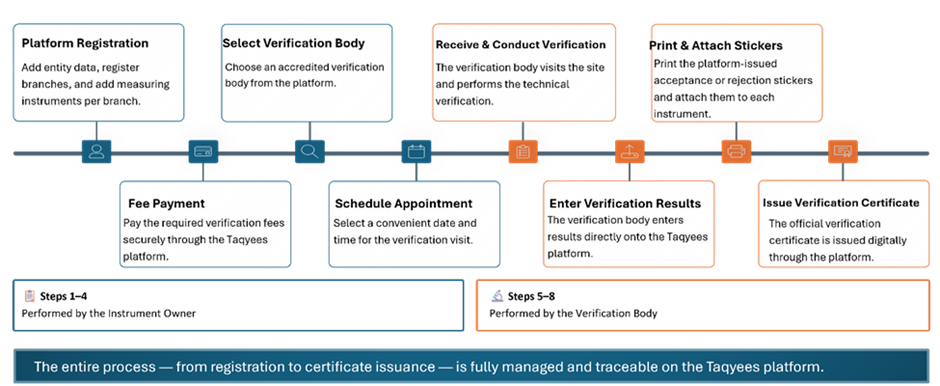
Figure 4. Example of service flow: a step-by-step walkthrough of how the Periodic Verification service works on the TAQYEES platform – from registration to certificate issuance.
This workflow demonstrates how TAQYEES transforms conventional legal metrology procedures into a fully digital, paperless, and traceable process. By integrating service requests, scheduling, field operations, verification results, sticker issuance, and certificate generation into a single platform, TAQYEES significantly enhances operational efficiency, regulatory oversight, and stakeholder confidence while providing real-time visibility across the entire verification lifecycle.
Beyond digitalizing service delivery, TAQYEES has transformed the execution of legal metrology technical operations into a standardized, intelligent, and fully digital environment. Activities are now performed through automated workflows integrated within the platform. This digital transformation improves operational efficiency, reduces human error, strengthens metrological traceability, and ensures consistent implementation of technical procedures across all verification activities.
The platform's technical capabilities include:
Digital Technical Reporting
Test reports are generated electronically using standardized templates, eliminating paper-based documentation.
Automated Calculation Engine
Measurement calculations are performed automatically according to approved verification procedures, improving accuracy and eliminating manual computation.
Electronic Inspection Workflows
Verification activities are executed through structured digital workflows that guide inspectors through each technical step.
Real-Time Report Generation
Verification reports are generated instantly upon completion of field activities, enabling faster service delivery.
Centralized Operational Monitoring
Technical operations are monitored through a unified platform, providing real-time visibility into verification activities nationwide.
Standardized Technical Procedures
All inspectors follow harmonized digital procedures, ensuring consistency and uniform application of legal metrology requirements.
As illustrated in Figure 5, the platform automatically generates Non-Automatic Weighing Instrument (NAWI) test reports, with all required calculations performed by the system rather than manually. This significantly reduces administrative effort, minimizes calculation errors, and improves the consistency, reliability, and auditability of technical verification results.
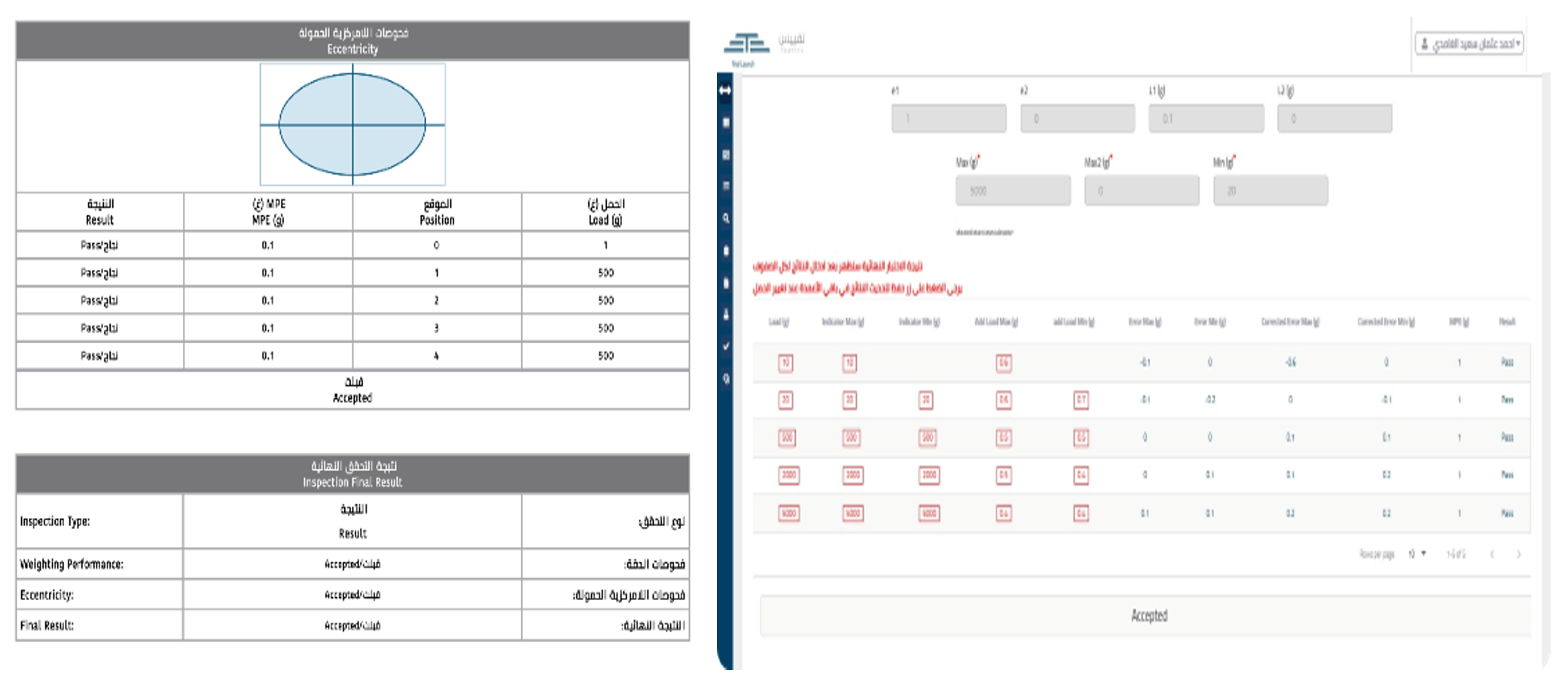
Figure 5.
3. The Outcome
3.1 Centralization of Operations
By consolidating operational data into a single digital ecosystem, TAQYEES enables proactive supervision, enhances transparency, supports evidence-based decision-making, and strengthens the efficiency and consistency of legal metrology operations at the national level.
Unlike conventional digital service platforms, TAQYEES extends beyond service automation by providing a real-time operational command and monitoring capability. This enables regulators to supervise nationwide legal metrology activities through a single digital environment, supporting proactive governance, continuous performance monitoring, and informed regulatory decision-making.
TAQYEES provides a centralized operational intelligence and monitoring environment that enables real-time oversight of legal metrology activities. Through integrated dashboards and automated reporting, the platform delivers continuous visibility into field operations, service performance, verification activities, and regulatory compliance, empowering decision-makers with timely and reliable information. The monitoring and reporting capabilities include:
Real-Time Operational Dashboards
Providing live visibility into ongoing verification activities and operational performance.
Automated Performance Reporting
Generating dynamic reports to support operational management and strategic decision-making.
Oversight
Monitoring the performance and activities of licensed verification bodies through a unified digital environment.
Nationwide Operational Monitoring
Tracking verification activities across different regions through a centralized platform.
Data-Driven Decision Support
Transforming operational data into actionable insights that improve planning, resource allocation, and regulatory effectiveness.
3.2 Promoting trust
A key innovation introduced by TAQYEES is the transformation of the traditional verification sticker into a digitally verifiable trust mechanism. Once a measuring instrument successfully completes the verification process, the platform issues an official verification sticker containing a unique digital identity that can be authenticated instantly.
As illustrated in Figure 6, by scanning the QR code, inspectors, businesses, and consumers can access real-time verification information directly from the platform, including the instrument's verification status, validity period, identification details, and regulatory information. This eliminates reliance on paper records while significantly improving transparency, traceability, and public confidence in verified measuring instruments.</p />
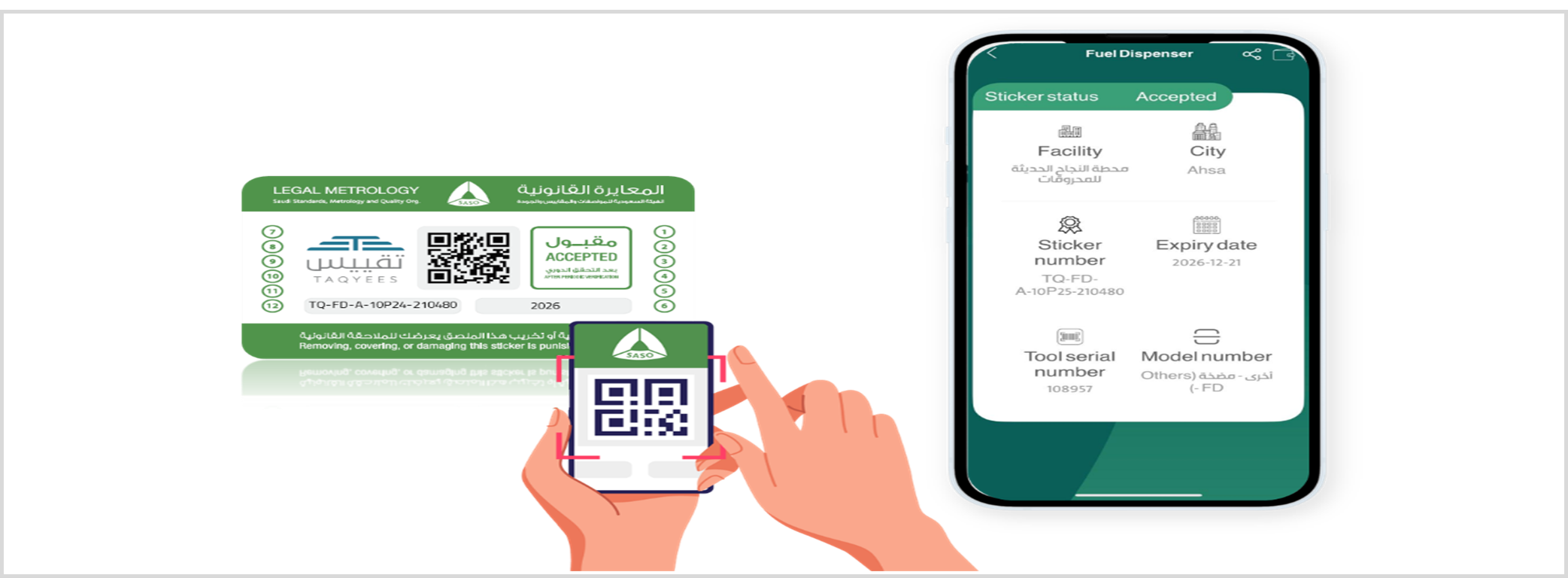
Figure 6.
3.3 National Impact
The cumulative outcomes demonstrate the transformative potential of a fully digital legal metrology ecosystem operating at national scale. As illustrated in Figure 7, Since its launch, TAQYEES has facilitated the verification of more than 6.8 million electricity meters, over one million water meters, 350 000 fuel dispensers, and 100 000 weighing instruments. In addition, the platform has processed over 160 000 digital service requests, registered more than 11 000 regulated entities, and supported over 57 000 field inspections. These achievements reflect not only the scale of operations enabled by digital transformation, but also the platform's ability to deliver standardized, traceable, and efficient regulatory services that would have been impractical under fragmented, paper-based processes.
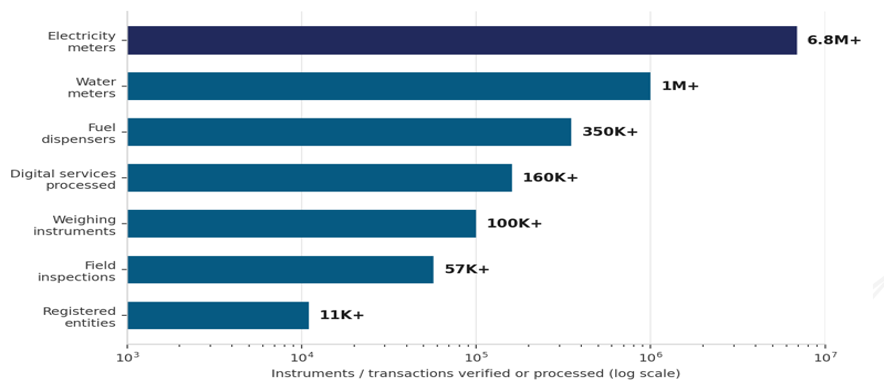
Figure 7.
3.4 Conclusion
Saudi Arabia's experience demonstrates that the digital transformation of legal metrology extends well beyond the modernization of regulatory services. When legal metrology is designed as an integrated digital ecosystem – connecting manufacturers, importers, verification bodies, regulators, businesses, and consumers – it evolves from a collection of isolated regulatory procedures into a strategic national capability. Such an ecosystem enables end-to-end traceability, real-time regulatory oversight, transparent compliance, and trusted measurements throughout the entire lifecycle of measuring instruments. Ultimately, this approach strengthens market confidence, promotes fair trade, protects consumers, and contributes to a more competitive and resilient economy. Trusted measurements are not merely a technical objective – they are a cornerstone of trusted economies.