OIML BULLETIN - 2026 - VOLUME LXVII - NUMBER 3
f o c u s p a p e r
Developing metrology education for the National Quality Infrastructure
A university-based framework from the Philippines
Emmie G. Reyes
Central Mindanao University  , Philippines
Citation: E.G. Reyes 2026 OIML Bulletin LXVII(3) 20260310
Abstract
Metrology is a fundamental pillar of the National Quality Infrastructure (NQI), providing measurement traceability and technical confidence that support trade, industry, regulatory compliance, scientific research, and sustainable development. Despite the establishment of the Philippine National Measurement System under Republic Act No. 9236, formal university-based metrology education remains limited, constraining the long-term development of national metrology capability. To address this gap, this paper proposes a University-Based Metrology Capacity Development Model that integrates education, applied research, laboratory capability development, and strategic partnerships. Informed by policy review, institutional assessment, stakeholder engagement, international benchmarking, and collaboration with the National Metrology Laboratory of the Philippines (NMLPhil) under the Department of Science and Technology–Industrial Technology Development Institute (DOST-ITDI), the framework is currently being established at Central Mindanao University through the development of curricula, faculty capacity, laboratory capability, collaborative research, and professional engagement. One principal component is the proposed Bachelor of Science in Metrology, designed to develop competencies in measurement science, calibration, measurement uncertainty, metrological traceability, quality systems, and legal metrology. The model demonstrates how higher education institutions can complement the technical functions of NMLPhil while contributing to workforce development and the long-term sustainability of national measurement systems. As a structured, scalable, and adaptable framework, it provides a practical reference for higher education institutions, government agencies, NMLPhil, and policymakers seeking to strengthen metrology capability through higher education and support a resilient National Quality Infrastructure.
1. Measuring for National Development: The Need for Metrology Education
Reliable measurement underpins modern society, providing the technical foundation for scientific research, industrial production, healthcare, environmental protection, international trade, consumer protection, and regulatory decision-making. Confidence in measurement depends on results that are accurate, traceable, and internationally comparable. This comparability is achieved through metrological traceability, which links measurement results to recognized references through an unbroken chain of calibrations, each contributing to the stated measurement uncertainty [1, 2].
As manufacturing systems, global supply chains, and regulatory frameworks become increasingly interconnected, the importance of reliable measurement continues to grow. Accurate measurements enable manufacturers to control production processes, laboratories to verify product conformity, and regulators to protect consumers, facilitate fair trade, and enforce technical requirements. Legal metrology further strengthens this system by ensuring the reliability of measurements used in commercial transactions and other regulated activities. Beyond traditional applications in trade, legal metrology now supports healthcare, environmental monitoring, renewable energy systems, intelligent manufacturing, and digital technologies, where accurate and reliable measurements are essential for protecting public welfare and supporting sustainable development [3, 4].
These developments have significantly increased the demand for professionals with expertise in measurement science, metrological traceability, measurement uncertainty, laboratory quality systems, and legal metrology. Emerging technologies – including digital manufacturing, renewable energy, artificial intelligence, intelligent sensing, and digital quality management systems – continue to increase both the complexity and strategic importance of measurement activities [1, 5]. However, sustaining national metrology capability requires not only advanced measurement standards and laboratory infrastructure but also a competent workforce capable of applying measurement science across research, industry, regulation, and innovation.
Despite this growing demand, formal university-based metrology education remains limited in many countries, including the Philippines, where measurement science is generally incorporated into engineering and science programs rather than offered as a dedicated academic discipline. This educational gap limits the long-term development of a sustainable pipeline of metrology professionals needed to support the evolving requirements of the Philippine National Quality Infrastructure. Higher education institutions are therefore well positioned to complement the technical functions of NMLPhil by developing future professionals, strengthening research capability, enhancing laboratory competence, and fostering collaboration among government, industry, and the scientific community [3, 5].
2. The Philippine National Quality Infrastructure and the Need for Metrology Education
The Philippine National Quality Infrastructure (NQI) comprises the institutional framework for metrology, standards, accreditation, and conformity assessment that supports industrial competitiveness, regulatory effectiveness, consumer protection, and international trade [3, 4]. Within this framework, metrology provides the scientific foundation for ensuring that measurements are accurate, traceable to the International System of Units (SI), and internationally comparable [1, 2].
The Philippine NQI is implemented through complementary government institutions with distinct but interconnected mandates. The DOST-ITDI, operates the NMLPhil, which serves as the country’s National Metrology Institute and is responsible for establishing, maintaining, and disseminating the Philippine National Measurement Standards [6, 7]. The Department of Trade and Industry (DTI), through the Bureau of Philippine Standards (BPS) and the Philippine Accreditation Bureau (PAB), oversees the national systems for standardization and accreditation that support conformity assessment and confidence in Philippine products and services [8,, 9, 10]. The Philippine National Measurement System is established under Republic Act No. 9236, while participation in the Bureau International des Poids et Mesures (BIPM), the International Organization of Legal Metrology (OIML), the Asia Pacific Metrology Programme (APMP), and the CIPM Mutual Recognition Arrangement (CIPM MRA) supports the international recognition of Philippine measurement capabilities through technical cooperation, metrological traceability, and participation in internationally recognized measurement systems [6, 11, 12].
Although the institutional framework is well established, its long-term sustainability depends on the continuous development of competent metrology professionals. The BIPM and OIML recognize education, technical training, knowledge transfer, and international collaboration as essential components of metrology capacity building [5]. In the Philippines, workforce development has primarily been supported through professional training, laboratory competency development, and technical programs implemented by NMLPhil in collaboration with partner institutions [7]. However, formal university-based metrology education remains limited, with measurement science generally incorporated into engineering, science, and technology programs rather than offered as a dedicated academic discipline.
Expanding university engagement in metrology education presents a strategic opportunity to strengthen the Philippine National Quality Infrastructure by complementing the technical functions of NMLPhil through formal education, applied research, laboratory capability development, and collaboration with government and industry. By educating future metrology professionals and strengthening research and innovation, higher education institutions can help build the skilled workforce required to sustain national measurement capability and respond to emerging scientific, industrial, and regulatory challenges. Moreover, stronger university engagement aligns with international efforts led by the BIPM, OIML, and APMP to advance national metrology capability through education, knowledge transfer, technical cooperation, and workforce development [5, 11, 12]. These efforts contribute to a more resilient and sustainable National Quality Infrastructure and provide the foundation for the University-Based Metrology Capacity Development Model presented in Section 4.
3. Bridging the National Metrology Capacity Gap Through Higher Education
The long-term sustainability of a National Quality Infrastructure depends on the continuous development of competent professionals who can establish, maintain, and advance measurement capabilities across scientific, industrial, regulatory, and research settings. As measurement technologies continue to advance, the demand for expertise has expanded beyond traditional calibration laboratories to include advanced manufacturing, healthcare, renewable energy, environmental monitoring, digital technologies, and conformity assessment. Meeting these evolving requirements requires a sustainable pipeline of professionals equipped with the competencies needed to support modern metrology systems across scientific, industrial, and regulatory sectors [1, 2, 5].
NMLPhil play a central role in developing technical competence through calibration services, specialized training, proficiency testing, and international cooperation. While these activities strengthen the capabilities of practicing professionals, they are not intended to replace formal academic education. Developing a sustainable metrology workforce therefore requires complementary educational pathways that prepare future metrology professionals before they enter government laboratories, industry, research institutions, and conformity assessment organizations [5, 7, 11].
Higher education institutions provide an environment where education, laboratory instruction, research, and industry engagement are integrated. Through formal academic programs, laboratory-based learning, applied research, and collaborative projects, universities develop both theoretical knowledge and practical competencies while supporting innovation, technology transfer, and workforce development [3, 5].
Rather than duplicating the functions of NMLPhil, universities complement them by developing future professionals, strengthening research capability, expanding laboratory competence, and fostering collaboration among academia, government, and industry. Together, universities and NMLPhil create a stronger ecosystem for metrology education, research, innovation, and workforce development that supports the long-term objectives of the National Quality Infrastructure [3, 5, 7]. Despite the recognized importance of higher education in developing scientific and technical capability, limited discussion exists in the literature on structured institutional frameworks that systematically integrate metrology education, laboratory capability, research, and stakeholder collaboration within the National Quality Infrastructure.
4. A University-Based Metrology Capacity Development Model
Addressing this gap requires an educational model that complements the technical functions of NMLPhil while strengthening long-term human resource development. While NMLPhil remain responsible for maintaining national measurement standards, ensuring metrological traceability, providing calibration services, and supporting international cooperation, universities complement these functions by developing future professionals, advancing applied research, strengthening laboratory capability, and facilitating knowledge transfer. Recognizing these complementary roles and addressing the existing educational gap provides the foundation for the proposed University-Based Metrology Capacity Development Model, which systematically integrates education, research, laboratory capability development, and strategic partnerships to strengthen national metrology capability and support the long-term sustainability of the National Quality Infrastructure [3, 5, 7].
The University-Based Metrology Capacity Development Model was developed through a synthesis of policy review, institutional assessment, consultation with NMLPhil and other relevant stakeholders, international benchmarking of metrology education initiatives, and analysis of workforce requirements identified in national and international literature. These complementary sources informed the development of the framework and the identification of its five sequential phases. The phases were derived from the logical sequence required to establish a sustainable university-based metrology program, beginning with stakeholder engagement and needs assessment, followed by institutional readiness, program development, implementation, and continuous improvement.
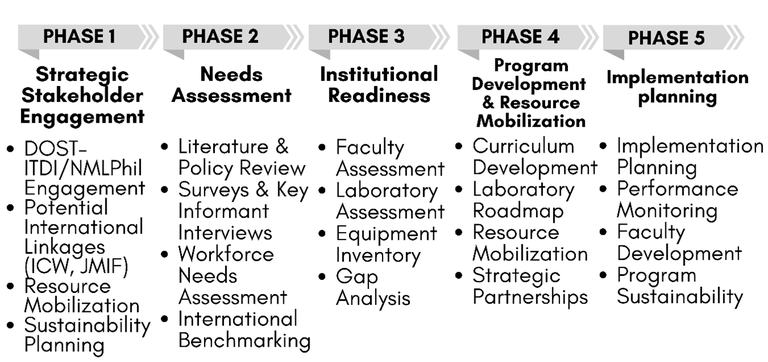
Figure 1. Phased Framework for Establishing a University-Based Metrology Capacity Development Model at Central Mindanao University.
Figure 1 illustrates the phased framework for establishing a University-Based Metrology Capacity Development Model at Central Mindanao University.
Phase 1 focuses on strategic stakeholder engagement with NMLPhil, government agencies, accreditation bodies, industry, professional organizations, and potential international partners. This engagement establishes the institutional relationships and resource commitments needed to support program development.
Phase 2 involves a systematic needs assessment using policy and literature review, workforce analysis, stakeholder consultation, and international benchmarking to identify competency requirements, emerging measurement technologies, research priorities, and national workforce needs [3, 5, 7, 11].
Phase 3 assesses institutional readiness, including faculty expertise, laboratory infrastructure, equipment, governance arrangements, institutional policies, and available financial resources. Building on the identified needs and readiness assessment, Phase 4 focuses on program development and resource mobilization through curriculum design, laboratory roadmaps, faculty development, continuing professional education, and strategic partnerships. Collaboration with NMLPhil and accredited laboratories strengthens technical competence by providing access to reference standards, traceable calibration services, advanced laboratory facilities, technical mentoring, laboratory quality systems, practical training, and collaborative research opportunities that may not be available within universities alone [5, 7, 13].
Phase 5 covers implementation planning, performance monitoring, faculty development, program sustainability, evaluation, and continuous improvement. Educational outcomes, graduate competencies, stakeholder feedback, research performance, and institutional partnerships should be reviewed regularly to maintain alignment with scientific advances, industrial needs, regulatory developments, and national priorities. Continuous monitoring supports evidence-based curriculum improvement, strengthens institutional quality assurance, and enables programs to adapt to evolving technological and regulatory requirements.
The proposed model is expected to develop competent metrology professionals, strengthen university laboratory capabilities, expand applied metrology research, foster sustainable collaboration between universities and NMLPhil, and contribute to the long-term development of the National Quality Infrastructure. By integrating education, research, laboratory development, and strategic partnerships within a continuous improvement framework, the model provides a scalable and adaptable approach that higher education institutions can implement to strengthen national metrology capability while responding to evolving scientific, industrial, and societal needs.
5. Central Mindanao University: Establishing a University-Based Metrology Capacity Development Model
This is a proposed implementation model based on institutional planning and stakeholder engagement in Central Mindanao University (CMU). Currently, CMU is establishing a University-Based Metrology Capacity Development Model through the progressive development of institutional capacities as a strategic initiative to strengthen metrology education while contributing to the Philippine National Quality Infrastructure (NQI). The initiative demonstrates how higher education institutions can support national measurement capability by integrating education, research, laboratory development, and strategic partnerships. CMU’s established strengths in science, engineering, agriculture, and quality management provide a suitable environment for integrating measurement science and scientific, industrial, and legal metrology across teaching, research, and community engagement. Existing laboratory facilities, faculty expertise, and quality assurance systems provide a foundation for strengthening measurement traceability, calibration capability, and applied metrology research while supporting laboratory development in accordance with internationally recognized practices, including ISO/IEC 17025 [13].
Consistent with the proposed University-Based Metrology Capacity Development Model, CMU leverages its academic, laboratory, and quality management systems as the institutional foundation for metrology education. Implementation is supported through strategic partnerships with NMLPhil, the Philippine Metrology, Standards, Testing and Quality Organization (PhilMSTQ), and other national and international stakeholders involved in metrology and quality infrastructure. These partnerships support faculty development, laboratory planning, curriculum design, technical mentoring, professional networking, and collaborative research while promoting alignment with international best practices [1, 2, 3, 4]. One principal outcome of this collaborative effort is the proposed Bachelor of Science in Metrology, which aims to establish the Philippines’ first formal undergraduate program dedicated to metrology. The curriculum is designed to address national workforce needs by developing competencies in measurement science, calibration, uncertainty evaluation, metrological traceability, quality systems, and legal metrology. Graduates are expected to contribute to NMLPhil, calibration and testing laboratories, manufacturing industries, regulatory agencies, and conformity assessment bodies, thereby strengthening the country’s technical workforce.
 2
2
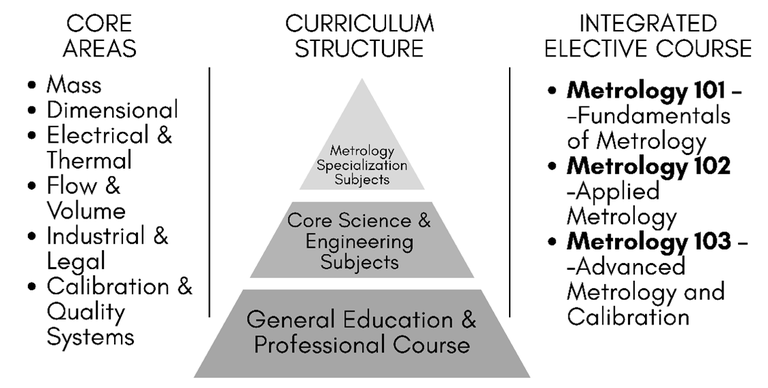
Figure 2. Illustrative Curriculum Framework Supporting the University-Based Metrology Capacity Development Model.
Figure 2 illustrates how the proposed Bachelor of Science in Metrology operationalizes the educational component of the University-Based Metrology Capacity Development Model by progressively developing competencies across scientific, industrial, and legal metrology. Beginning with foundational general education, science, and engineering courses, the curriculum advances to specialized metrology courses covering the major measurement disciplines. It integrates measurement science, calibration, quality systems, laboratory practice, and applied metrology, thereby translating national workforce requirements into structured higher education.
Beyond curriculum development, the model integrates laboratory capability enhancement, faculty development, collaborative research, continuing professional education, and strategic partnerships with NMLPhil, as well as accredited laboratories, government agencies, and industry. These complementary activities reinforce classroom learning through practical training, applied metrology, collaborative research, and professional engagement, thereby strengthening national metrology capability and supporting the long-term development of the National Quality Infrastructure.
Collectively, these components demonstrate how the University-Based Metrology Capacity Development Model can be operationalized within a higher education institution to support sustainable national metrology capacity development. Although being developed within the Philippine context, the framework shows how higher education institutions can complement the technical functions of NMLPhil through education, research, laboratory development, and strategic partnerships. It provides a practical and scalable approach that may be adapted by higher education institutions in other countries seeking to strengthen national metrology capability and support the long-term development of their National Quality Infrastructure.
6. Strategic Partnerships
The implementation and long-term sustainability of university-based metrology education require coordinated engagement among international organizations, NMLPhil, professional organizations, industry, accredited laboratories, higher education institutions, and other capacity-building partners. These stakeholders contribute complementary expertise, technical resources, and institutional support that collectively strengthen national measurement capability and the National Quality Infrastructure (NQI).
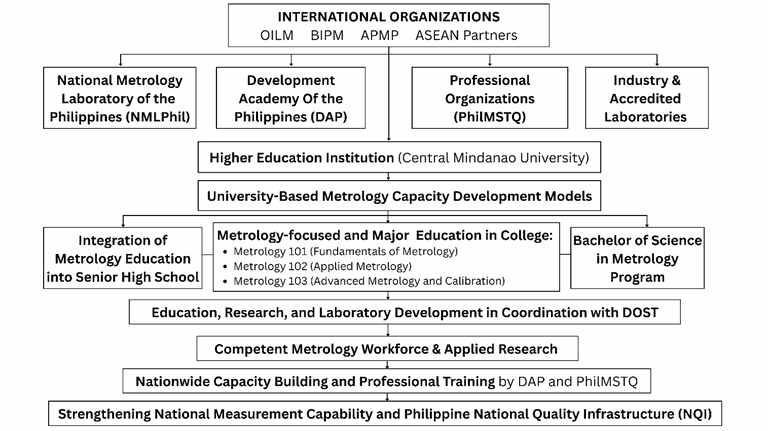
Figure 3. Partnership Ecosystem Supporting University-Based Metrology Capacity Development.
International organizations, including the International Organization of Legal Metrology (OIML), the Bureau International des Poids et Mesures (BIPM), and the Asia Pacific Metrology Programme (APMP), provide internationally recognized principles that promote harmonization, metrological traceability, and technical cooperation. At the national level, NMLPhil, professional organizations, industry, accredited laboratories, and capacity-building institutions support standards implementation, workforce development, professional education, and applied research, providing the technical foundation for metrology education. Higher education institutions integrate these contributions through education, research, and laboratory development to prepare graduates with competencies in scientific, industrial, and legal metrology.
Collectively, these partnerships support each phase of the University-Based Metrology Capacity Development Model by informing curriculum development, strengthening laboratory capability, expanding faculty expertise, facilitating student training, promoting collaborative research, and ensuring alignment with national and international metrology priorities. The partnership ecosystem provides a structured approach for aligning academic programs with national measurement priorities while strengthening collaboration among higher education institutions, government agencies, industry, NMLPhil, and international organizations. It may serve as a practical reference for countries seeking to strengthen their National Quality Infrastructure through higher education.
7. Implications for National and Regional Metrology Capacity Development
The proposed University-Based Metrology Capacity Development Model demonstrates how higher education can be systematically integrated into national metrology capacity development while complementing existing National Quality Infrastructure (NQI) systems. Although developed within the Philippine context, the framework provides a scalable model that can be adapted to different institutional arrangements and stages of metrology development, offering a structured reference for countries seeking to strengthen measurement capability through higher education.
For policymakers, the framework highlights the importance of integrating higher education into national metrology strategies as a sustainable mechanism for workforce development, laboratory capability, and research capacity. For universities, it provides a structured guide for developing metrology education programs aligned with national priorities, technological developments, and industry requirements. NMLPhil, professional organizations, industry, and accredited laboratories likewise benefit from stronger collaboration with higher education institutions through joint research, technical mentoring, workforce development, and continuing professional education.
Beyond its national application, the framework also supports regional cooperation by encouraging collaboration among universities, NMLPhil, and international organizations engaged in metrology and quality infrastructure. Such collaboration facilitates knowledge exchange, technical harmonization, and the development of comparable measurement capabilities across countries while strengthening regional metrology networks.
As measurement science continues to evolve in response to digital transformation, advanced manufacturing, renewable energy, artificial intelligence, healthcare, and other emerging technologies, strengthening the interface between higher education and national metrology systems will become increasingly important. The proposed University-Based Metrology Capacity Development Model provides a practical, scalable, and collaborative approach for developing future metrology professionals, strengthening measurement capability, and supporting sustainable National Quality Infrastructure at both national and regional levels.
8. Conclusion and Future Directions
The University-Based Metrology Capacity Development Model provides a structured and adaptable framework for integrating higher education into national metrology capacity development. By integrating education, applied research, laboratory capability, and strategic partnerships with the objectives of the National Quality Infrastructure (NQI), the framework complements the technical functions of NMLPhil while supporting the long-term sustainability of national measurement systems. Beyond its application in the Philippine context, the framework offers a practical and scalable approach that higher education institutions can adapt to strengthen metrology education, workforce development, and national measurement capability across diverse institutional settings.
The framework is intended to evolve in response to advances in measurement science and changing national priorities. Continued collaboration among universities, NMLPhil, regional metrology organizations, professional organizations, industry, and international bodies will facilitate the exchange of knowledge, educational practices, and technical expertise that can support the ongoing refinement of university-based metrology education. As additional institutions implement and evaluate similar approaches, the resulting experience will contribute to strengthening global metrology capacity and supporting more resilient and sustainable National Quality Infrastructure systems.
Future work may include pilot implementation and evaluation of the proposed framework and its curriculum component, assessment of graduate competencies and institutional readiness across different higher education institutions, and adaptation of the framework within diverse national metrology systems. Comparative studies involving multiple countries may further refine the framework, evaluate its effectiveness in different educational and regulatory environments, and strengthen its applicability across regional and institutional contexts.
Ultimately, the proposed University-Based Metrology Capacity Development Model demonstrates the strategic role of higher education in developing competent metrology professionals, strengthening National Quality Infrastructure, and supporting internationally comparable measurement systems that can respond to future scientific, industrial, technological, and societal challenges.
References
[1] Bureau International des Poids et Mesures, Le Système international d'unités / The International System of Units (SI), 9th ed., Version 4.01. Sèvres, France: BIPM, 2026. doi:10.59161/AUEZ1291.
[2] Joint Committee for Guides in Metrology, Evaluation of Measurement Data - Guide to the Expression of Uncertainty in Measurement (JCGM 100:2008). Sèvres, France: JCGM, 2008. doi:10.59161/JCGM100-2008E.
[3] United Nations Industrial Development Organization, The Role of Metrology in the Context of the Sustainable Development Goals. Vienna, Austria: UNIDO, 2020.
[4] International Organization of Legal Metrology, OIML D 1:2020 Considerations for a Law on Metrology. Paris, France: OIML, 2020. Available from https://www.oiml.org/en/publications/documents.
[5] Bureau International des Poids et Mesures and International Organization of Legal Metrology, National Metrology Systems: Developing the Institutional and Legislative Framework. Sèvres, France: BIPM and OIML, 2023.
[6] Republic of the Philippines, Republic Act No. 9236: The National Metrology Act of 2003. https://lawphil.net/statutes/repacts/ra2004/ra_9236_2004.html
[7] National Metrology Laboratory of the Philippines: Accuracy that Builds Trust and Quality. https://www.nmlphil.com/
[8] Department of Trade and Industry, Bureau of Philippine Standards: About the Bureau of Philippine Standards. https://bps.dti.gov.ph/about-us/about-the-bureau-of-philippine-standards-dti-bps
[9] Department of Trade and Industry, Philippine Accreditation Bureau: Philippine Accreditation Bureau. https://www.dti.gov.ph/konsyumer/accreditation/
[10] Republic of the Philippines, Executive Order No. 802: Strengthening and Recognizing the Philippine Accreditation Office Attached to the Department of Trade and Industry as the National Accreditation Body, 2009. https://lawphil.net/executive/execord/eo2009/eo_802_2009.html
[11] Bureau International des Poids et Mesures: CIPM Mutual Recognition Arrangement (CIPM MRA). https://www.bipm.org/en/cipm-mra
[12] Asia Pacific Metrology Programme: About APMP. https://www.apmpweb.org
[13] International Organization for Standardization: ISO/IEC 17025:2017, General requirements for the competence of testing and calibration laboratories. ISO, Geneva, Switzerland, 2017. https://www.iso.org/standard/66912.html