OIML BULLETIN - 2026 - VOLUME LXVII - NUMBER 2
f o c u s p a p e r
OIML participation in COP29, COP30, and the UNFCCC
Ian Dunmill

BIML 
Citation: I. Dunmill 2026 OIML Bulletin LXVII(2) 202602-prov04
1. The United Nations Framework Convention on Climate Change (UNFCCC)
The United Nations Framework Convention on Climate Change (UNFCCC), which was adopted in 1992, provides the foundation for coordinated global action to combat climate change and its impacts on humanity and ecosystems. At the time of its adoption, there was scientific uncertainty about climate change, but the Convention called for precautionary action through its objective to “stabilize greenhouse gas concentrations in the atmosphere at a level that would prevent dangerous anthropogenic interference with the climate system”.
The Convention was followed up by two other significant agreements:
- The Kyoto Protocol, agreed in 1997, which extended the Convention’s principles into commitments for developed countries by setting legally binding emission reduction targets.
- The 2015 Paris Agreement then committed all countries to combat climate change and adapt to its effects. It aims to keep the global average temperature below
2 °C above pre-industrial levels, and to try to limit the rise to1.5 °C. It also required each country to set its own “Nationally Determined Contribution” (NDC) and to update this every five years, as well as a transparency framework for actions and support, and corresponding compliance mechanisms.
2. The Conference of the Parties (COP)
All states which are Parties to the Convention are represented at the COP, which is the supreme decision-making body of the Convention. The COP reviews the implementation of the Convention and other legal instruments, and decides on arrangements to promote the effective implementation of the Convention. It also reviews national communications and emission inventories as well as assessing measures taken by Parties and the progress made in achieving the ultimate objective of the Convention.
The first meeting of the COP was held in Berlin, Germany, in March 1995, and its meeting are normally held every year, rotating among the five UN regions, along with its presidency.
At each COP, all of the official sessions, meetings, side events and press conferences take place in the “blue zone”, which is the formal conference and negotiation space managed by UN Climate Change, and only accessible to Party delegations, Heads of State, admitted observers and accredited press.
There is also a publicly accessible “green zone”, managed by each COP’s host country. In this area, representatives of civil society such as youth representatives, artists, businesses, and regional and local decision-makers are able to discuss, present and exchange ideas and solutions for a net-zero future in a more informal setting.
In XXXXXX the OIML submitted an application to become an “admitted observer", but due to resource constraints at the UNFCCC secretariat, the process can take several years. In order to participate in both COP29 and COP30, badges were lent to the OIML by the BIPM; this cooperation is deeply appreciated by the OIML.
3. COP29 (2024) – Baku, Azerbaijan
The OIML was approached by ISO in early 2024 about becoming a partner in a new initiative to run a “Standards Pavilion” in the blue zone at COP29 in Baku, Azerbaijan. The Pavilion enabled the standards community to connect with key stakeholders by hosting a series of interactive sessions which brought together experts, policymakers and negotiators to discuss how international standards can advance climate action.
The OIML delegates at COP29 were Bobjoseph Mathew (CIML President), Anthony Donnellan (BIML Director) and Ian Dunmill (BIML Assistant Director) although not all OIML delegates were present on the same days.
Participation as a “Supporter” allowed the OIML to organize two panel sessions at the Standards Pavilion, the titles of which were chosen to relate to the COP29 themes for the days on which they took place.
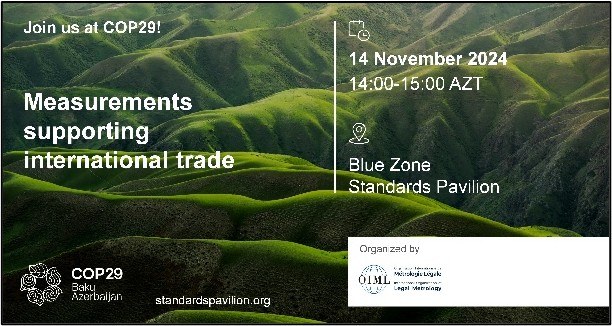
3.1 Panel session: Metrology supporting a sustainable future for transport
This session explored how the science, application, and regulation of measurement, in conjunction with other components of the quality infrastructure, assist with the delivery of better sustainability practices in trade.
It addressed three main questions:
- How can standards and measurement regulation actively contribute to more sustainable trade practices?
- How do measurement standards and technical regulations fit into the broader quality infrastructure, and how can they cooperate to achieve better coordinated offerings for consumers and society?
- What is needed to make measurement standards even better and more responsive in relation to sustainability and consumer needs?
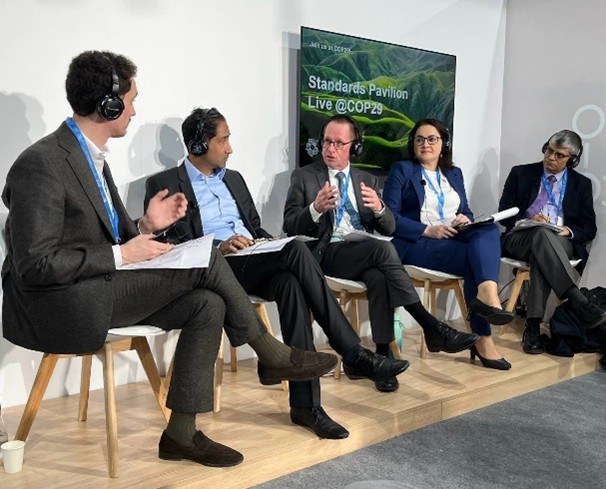
Speakers:
- Bobjoseph Mathew (CIML President)
- Martin Milton (BIPM Director)
- Anil Mishra (UNESCO)
- Kamala Mammadzada (Azerbaijan Standards Institution)
- Facilitator: Bledar Beqiri (Swedish Institute for Standards)
The event was livestreamed, and is available on YouTube:
https://www.youtube.com/watch?v=5vj_zw2lpyc
3.2 Panel session: Metrology supporting a sustainable furture for transport
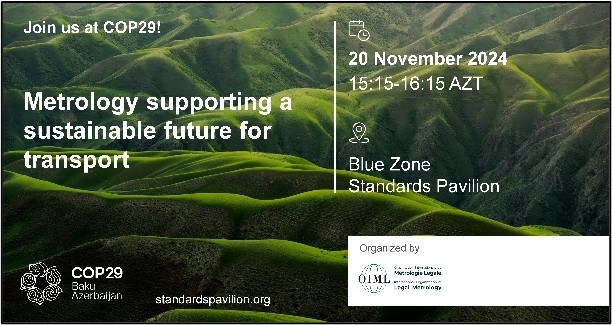
Measurement is critical to various elements of transport systems, including electric vehicle charging systems, hydrogen fuelled transport, hydrocarbon measurements, and vehicle emissions. These measurements take place not only for efficiency, but also for safety and regulatory purposes. This discussion explored initiatives being undertaken from a measurement perspective, and in particular, how legal metrology contributes to more efficient and sustainable transport options with reduced carbon emissions. The interactive session discussed the following questions:
- What measurement standards are currently in place in transport systems from a legal metrology perspective?
- What new areas are emerging concerning measurement in transport systems, and what are economies asking for from the perspective of OIML technical regulations?
- How do measurement standards assist in areas concerning carbon accounting?
Speakers:
- Anthony Donnellan (BIML Director)
- Christoph Winterhalter (CEO, DIN, Germany)
- Khamis Seyranov, (Director General, Azerbaijan Standardization İnstitute)
- İhsan Övüt (Secretary General, Standards and Metrology Institute for Islamic Countries (SMIIC))
- Facilitator: Ian Dunmill (Assistant Director, BIML)
The event was livestreamed, and is available on YouTube:
https://www.youtube.com/watch?v=1n_LN2Zd3M0

In addition to the formal sessions, there were many discussions with other COP29 participants, both at the Standards Pavilion and at the pavilions of other organizations and countries in the Blue Zone.
4. COP30 (2025) – Belém, Brazil
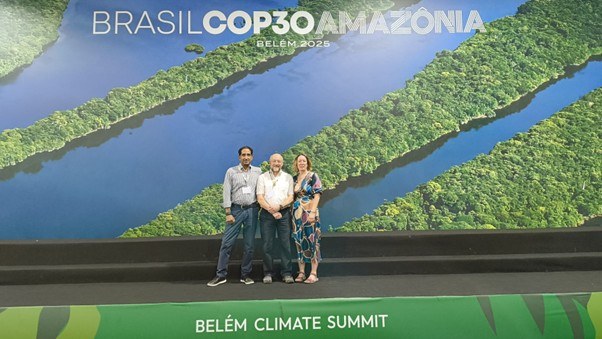
The OIML also attended COP30 as a partner in the ISO/IEC Standards Pavilion, as it had for COP29. On this occasion, the OIML was represented by Bobjoseph Mathew (CIML President), Ian Dunmill (BIML Assistant Director) and Pamela Dagg (CIML Member for Ireland).
The aim of the Standards Pavilion at COP30 was to advocate for the integration of international standards into climate policy, finance and reporting frameworks. It was again initiated by ISO, IEC, and UL Standards & Engagement, and had an increased collaboration across the field of standardisation, with 18 partners.

More information on the COP30 Standards Pavilion and its objectives, as well as the full programme of events, can be found at:
https://www.standardspavilion.org
At the level of partnership chosen by the OIML, we were able to organise two events at the Standards Pavilion during COP30. As at the previous year’s event, the titles of these events were chosen to relate to the COP30 themes for the days where slots were available when the OIML booked them.
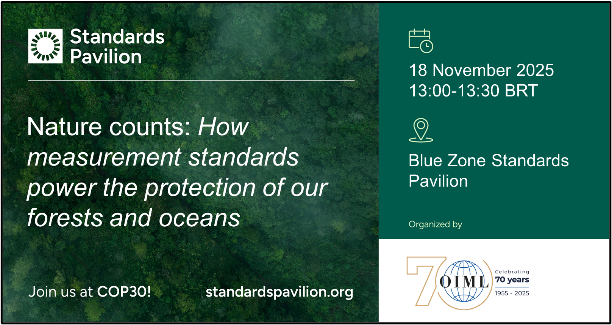
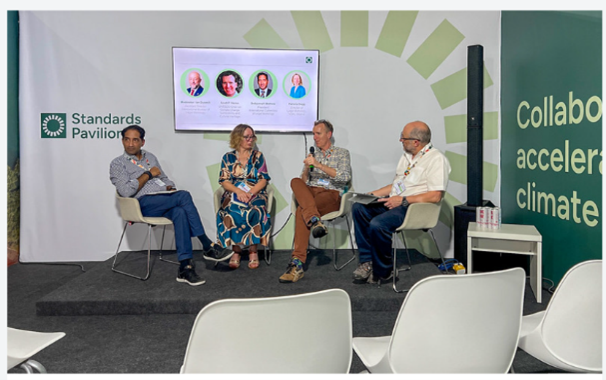
4.1 Fireside chat: Nature counts: How measurement standards power the protection of our forests and oceans
This fireside chat event was organized to show how international standards for measurement empower environmental action.
The panel explored how these international standards – championed by the OIML – help governments and organizations to assess the impact of policies supporting the UN Sustainable Development Goals, such as those on sustainably managed forests and ocean conservation.
Participants were able to see how reliable measurements build trust, encourage cooperation, and ultimately help secure a healthier future for our planet.
Speakers:
- Bobjoseph Mathew (CIML President)
- Pamela Dagg (CIML Member for Ireland)
- Scott Heron (James Cook University, Australia)
- Facilitator: Ian Dunmill (BIML Assistant Director)
The event was livestreamed, and is available on YouTube:
https://www.youtube.com/watch?v=EfeJRUJO_uc
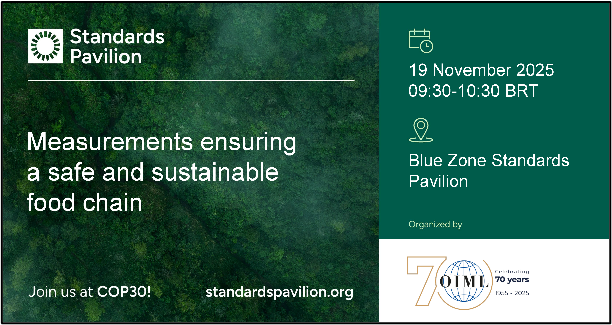
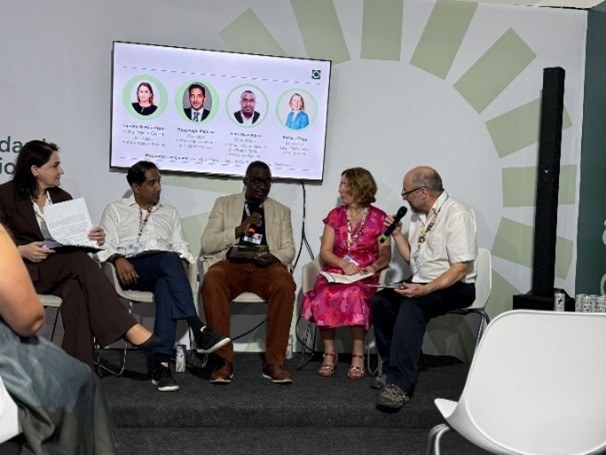
4.2 Panel session: Measurements ensuring a safe and sustainable food chain
This panel session allowed participants to discover how measurements and international standards ensure the safety and sustainability of the food chain.
National and international experts discussed the key challenges affecting different stages of food production, processing, and trade. They also explored how national, regional and international standards promote confidence, reduce barriers to trade, and protect consumers.
This showed how reliable measurements build trust, encourage cooperation, and ultimately help secure a healthier and sustainable future for our planet.
Speakers:
- Bobjoseph Mathew (CIML President)
- Pamela Dagg (CIML Member for Ireland)
- Kamala Mammadzada (Acting Director General, Azerbaijan Standardization Institute)
- Alick Muvundika (Deputy Director, National Institute for Scientific and Industrial Research, Zambia)
- Facilitator: Ian Dunmill (BIML Assistant Director)
The event was livestreamed, and is available on YouTube:
https://www.youtube.com/watch?v=XuUgGnJR7mE
As three OIML delegates were present together at COP30, it was possible to attend many other events taking place on other pavilions in the blue zone, as well as visiting a large number of pavilions and national delegations to promote and raise awareness of metrology.
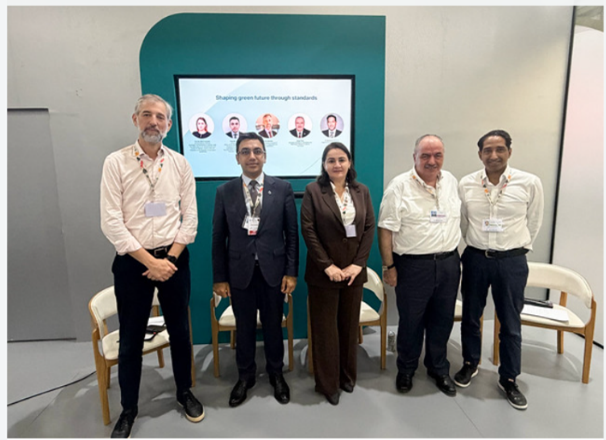
Bobjoseph Mathew was also able to represent the OIML on a panel discussion at the Azerbaijan Pavilion
4.3 Visit to INMETRO metrology boat
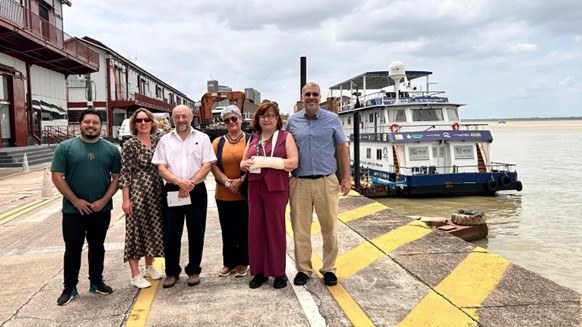
In 2018 Brazil was presented with the OIML CEEMS Award for their innovative solution to providing metrology services to remote locations in the Amazon region which are difficult or impossible to access by road. More information on this Award, and the “fluvial unit” can be found on the OIML website at:
https://www.oiml.org/en/structure/ceems/oiml-ceems-award/2018-ceems-award
Thanks to a kind invitation from INMETRO, Pamela Dagg and Ian Dunmill were very pleased to be able to visit this facility while it was in Belém during COP30.
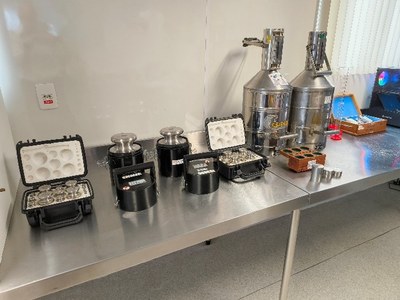
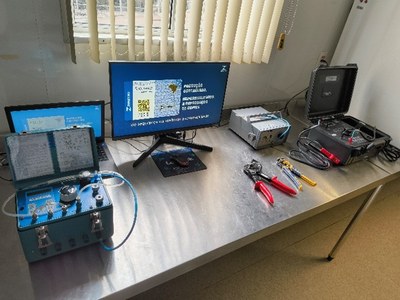
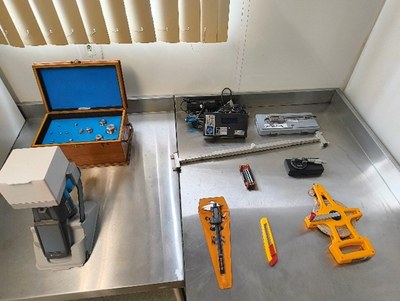
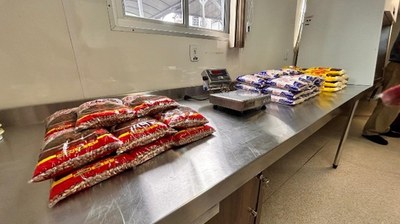
The boat provides laboratory facilities for mass, volume, length, pressure and electrical calibration work, as well as for the control prepackaged goods. It is normally based in Manaus, Amazon State, and is able to provide legal metrology services to remote municipalities along the Amazon River, which are often accessible only by the river itself.
4.4 Visit to Fortescue Green Pioneer
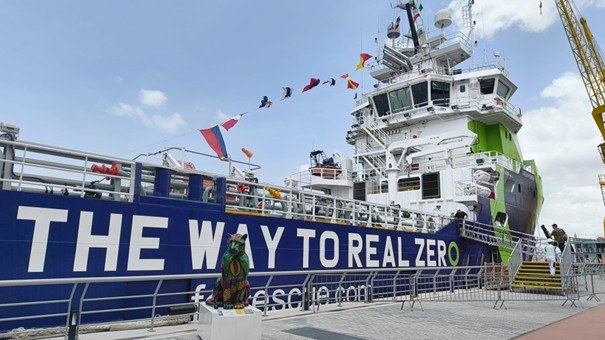
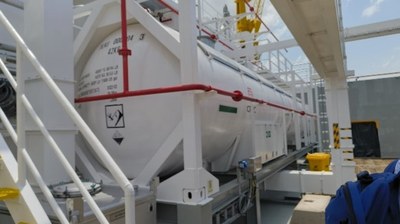
As a result of networking discussions in the blue zone, the OIML delegation was able to obtain an invitation to visit this ship, which was in Belém port to promote the use of ammonia as a green fuel. The ship is a technology demonstrator, and apart from its attendance at COP30, is used to visit ports worldwide to promote ammonia-fuelled shipping, and to address concerns related to the safety of ammonia as a fuel. Apart from seeing the technology in action, the OIML delegation was able to discuss the potential metrology and legal metrology challenges with measuring ammonia for bulk transfer to ships in the future.
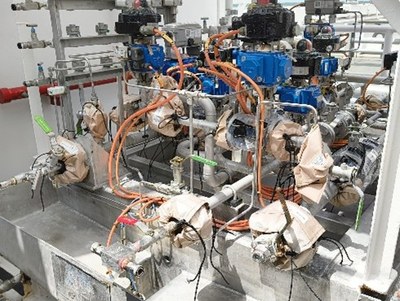
More information on the Fortescue Green Pioneer can be found at:
https://www.fortescue.com/en/real-zero/green-pioneer
5. COP31 – Antalya, Türkiye
The OIML has been approached again by the ISO team which will be organising a Standards Pavilion at COP31 in November 2026. The format of the pavilion will be different so as to encourage more interaction with visitors to the pavilion. This change is a direct result of feedback received from the OIML and other partners at previous COPs. Possibilities for the OIML’s participation in COP31 are currently under consideration.
6. Summary
The OIML’s participation in COP gives the Organization many opportunities to promote legal metrology, as well as metrology more generally, to an audience that we do not usually have contact with. Our own events at the Standards Pavilion have attracted a varied audience, as well as those already involved in QI matters at both COP29 and COP30. Participation also enabled the OIML to raise metrology-related questions during events being held at other pavilions, as well as during one-to-one discussions at those pavilions, with the interest of raising awareness of metrology issues in climate change mitigation.