OIML BULLETIN - 2026 - VOLUME LXVII - NUMBER 2
f o c u s p a p e r
Legal metrology for global sustainability
The role of the OIML
Ian Dunmill
 and Janet R. Miles
BIML 
Citation: I. Dunmill and J.R. Miles 2026 OIML Bulletin LXVII(2) 202602xxx1
<----------------------suggestion GEMINI---------------------->
Legal Metrology—The Invisible Engine of Global Sustainability
Introduction
In an era defined by the urgent need for resource efficiency and climate action, the intersection of sustainability and legal metrology has become a focal point for global governance. Legal metrology – the legislative, administrative, and technical procedures established by public authorities – serves as the foundational framework for accurate measurement, ensuring that "green" transitions are based on verifiable data rather than mere projections.
The Role of the CIML: Strategic Direction
The International Committee of Legal Metrology (CIML) has increasingly integrated sustainability into its strategic roadmap. By overseeing the development of International Recommendations (R), the CIML ensures that emerging technologies in the renewable energy sector are metrologically sound.
Renewable Energy Integration
Recent CIML decisions have prioritized the revision of standards for electricity meters and EV charging stations. These actions ensure that consumers are billed accurately for renewable energy, fostering public trust in the transition away from fossil fuels.
Resource Conservation
By harmonizing requirements for water and gas meters, the CIML facilitates better leak detection and consumption monitoring, directly contributing to UN Sustainable Development Goal 6 (Clean Water and Sanitation) and Goal 12 (Responsible Consumption and Production).
The BIML: Implementing Change
The International Bureau of Legal Metrology (BIML) acts as the operational heart of this movement, translating CIML policy into tangible global impact.
Capacity Building
The OIML’s focus on "Countries and Economies with Emerging Metrology Systems" (CEEMS) ensures that sustainability standards are not limited to industrialized nations. By providing training and toolkits, the BIML helps developing regions implement precise measurements for local agricultural exports and carbon sequestration projects.
Digital Transformation
The BIML is currently spearheading the transition toward Digital Calibration Certificates (DCCs). This move significantly reduces the paper trail and physical logistics of traditional metrology, lowering the carbon footprint of the OIML’s own administrative ecosystem.
Conclusion
As we look toward 2030, the synergy between the CIML’s vision and the BIML’s execution remains vital. Legal metrology is no longer just about fair trade; it is the metric by which we measure our planet’s survival.
SUGGESTIONS FOR IMPROVEMENT
To elevate this paper for the OIML Bulletin, you might consider the following refinements:
- Reference Specific Resolutions: Mention a specific OIML Recommendation (e.g., **OIML R 46** for active electrical energy meters) to provide concrete evidence of how technical work supports energy efficiency.
- The "Circular Economy" Angle: Elaborate on how legal metrology supports the circular economy. For instance, accurate weighing and measuring are critical in waste management and the repurposing of raw materials.
- Collaborative Efforts: Mention the OIML’s cooperation with other international bodies like the **BIPM** or **ISO**. Highlighting a "Quality Infrastructure" (QI) approach shows that legal metrology doesn't work in a vacuum but is part of a holistic sustainability ecosystem.
- Visual Aids: If the *Bulletin* allows, suggest including a infographic showing the link between specific **UN Sustainable Development Goals (SDGs)** and OIML technical committees.
</-------------------end of GEMINI text------------------------->
Abstract
Introduction
- Relevant Recommendations
- The QI4SD Index
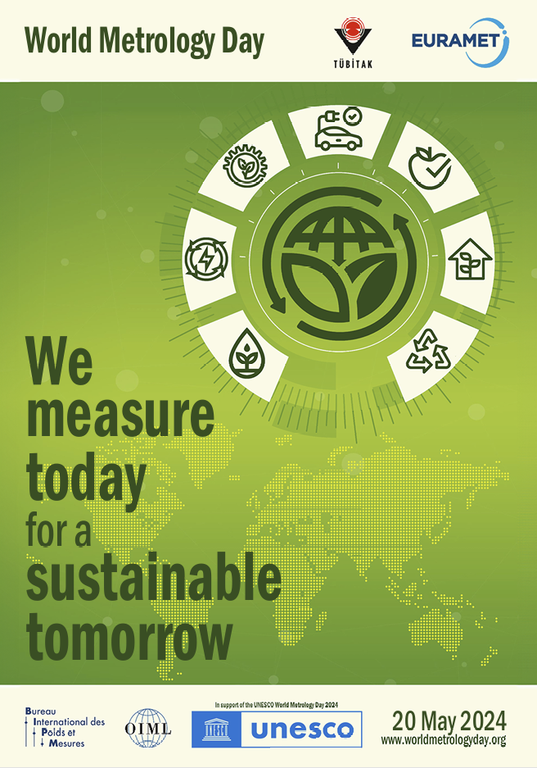
World Metrology Day and the OIML Micro-Survey 2024
Progress since Resolution CIML/2024/37
In 2024 the CIML passed the following Resolution:
Resolution no. CIML/2024/37
The Committee,
Recognising the importance of issues in the area of climate change to society, and to the activities of the OIML,
Considering that a number of the OIML’s current activities and technical work projects are aimed at better regulation and cooperation in the field of climate change in legal metrology activities,
Requests the BIML to complete the procedures necessary for the OIML to become an “accepted observer” in the United Nations Framework Convention on Climate Change (UNFCCC),
Requests the BIML to continue to engage with other stakeholders in the field of climate change, and
Encourages its Members to promote the use of legal metrology as an important tool in climate change mitigation and in the energy transition.
The BIML submitted an application to the UNFCCC in XXXXXXXX and XXXXXXXXXX [update].
Moreover, given the level of interest by the CIML, the OIML was represented at both the 29th and 30th UN Conferences of the Parties" (COPs), to promote the importance of legal metrology.
COP29 was held in Baku (Azerbaijan) in November 2024, and COP30 was held in Belém (Brazil). The activities organized under the auspices of the OIML within the Standards Pavilion at these events, are described in [XXXXXXXXXXX ref to Ian's COP paperXXXXXXXXXXXXXXXXXXX].
The OIML's publications and technical work and the SDGs
Conclusions
Legal metrology is no longer just about fair trade and consumer protection; it is the metric by which we measure our planet’s survival. When the CIML meets in October 2026 and assesses its priorities for the coming years, ensuring the reliability of measurements related to climate change, and international harmonization of legal metrology related to emerging technologies, will no doubt remain high on the agenda.