
OIML BULLETIN - 2026 - VOLUME LXVII - NUMBER 3
f o c u s p a p e r
Pseudo Fundo: An Alternative Test Load for Verification of Automatic Catchweighers
Yoshitada Tanaka  1 and Toshiyuki Takatsuji 2
1. National Metrology Institute of Japan (NMIJ)  , National Institute of Advanced Industrial Science and Technology (AIST)
2. Japan Measuring Instruments Federation (JMIF)
Citation: Y. Tanaka and T. Takatsuji 2026 OIML Bulletin LXVII(3) 20260303
Abstract
The weighing performance of automatic catchweighers is affected by the shape of the product being weighed and the position of its center of gravity. Consequently, OIML R 51 requires that verification tests be carried out using actual products processed on the production line where the catchweigher is installed. However, preparing representative products for every verification is often difficult due to practical, hygienic, and economic reasons.
To address this issue, the Japan Measuring Instruments Federation (JMIF) has developed an alternative test load named Pseudo Fundo. This study evaluates its applicability by comparing its weighing characteristics with those of actual packaged products. The evaluation was conducted using the mean error and the standard deviation of error specified in OIML R 51.
Experimental results showed that, for box-shaped and liquid-filled packages, Pseudo Fundo produced measurement results comparable to those obtained using actual products. In contrast, noticeable differences were observed for pillow-shaped packages because of their unique physical characteristics. These findings indicate that Pseudo Fundo has the potential to replace actual products in verification tests for certain categories of packaged goods.
Introduction
The metrological requirements and testing procedures for automatic catchweighers are specified in OIML R 51:2006 [1]. Section 6.1.3, Types of Test Loads, states that the test load shall consist of the actual products for which the instrument is intended.
This requirement exists because the weighing performance of a catchweigher, particularly the mean error and the standard deviation of error, is influenced by the product's shape and the location of its center of gravity.
Although actual packaged products are therefore preferable as test loads, preparing suitable products for every verification is often difficult. Even when they are available, their use may not be practical because of hygiene concerns or economic costs.
To solve this problem, JMIF established a working group to investigate alternative test materials that could substitute for actual products. One of the proposed solutions is Pseudo Fundo, which is introduced in this paper.
Pseudo Fundo
An alternative test load should reproduce, as closely as possible, the weight, dimensions, shape, and weight distribution of the actual product.
Since packaged products vary widely in size and configuration, designing and manufacturing a dedicated test load for each product is impractical. Likewise, using only one or a few types of alternative loads cannot adequately represent such diversity.
To overcome these difficulties, we adopted a modular design similar to children's building blocks, allowing various sizes, shapes, and weight distributions to be assembled. Specifically, the blocks were designed with the same geometry as LEGO® bricks, one of the world's most widely used construction toys.
However, LEGO® bricks themselves are too light to reproduce the mass of typical packaged products. Since many food products measured by catchweighers have densities close to 1 g/cm³, we fabricated blocks of similar density using a resin-based 3D printer (Agilista, Keyence Corporation).
The resulting modular test material was named Pseudo Fundo. "Pseudo" means false or imitation, while "Fundo" is an old Japanese word meaning "weight." The name was chosen because it is both descriptive and memorable.
Automatic Catchweigher Used in the Experiment
The specifications of the catchweigher used in this study were as follows:
- Maximum capacity: 600 g
- Verification scale interval: 0.2 g
- Accuracy class: XIII(1)
- Conveyor speed: 90 m/min
- Number of weighings: 120 (i.e. twice the minimum number required by OIML R 51:2006)
Both actual packaged products and Pseudo Fundo were tested. Two configurations of Pseudo Fundo were prepared:
- a solid box-shaped assembly (Figure 1), and
- a rectangular frame-shaped assembly (Figure 2).
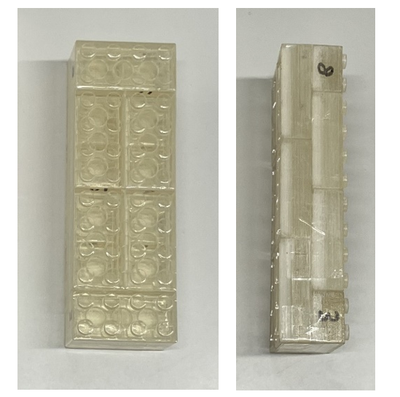
Figure 1. Top and side views of the assembled box-shaped Pseudo Fundo,
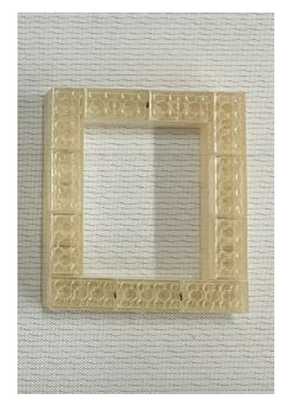
Figure 2. Pseudo Fundo assembled into a rectangular frame.
To evaluate only the influence of product shape on weighing performance, the dynamic compensation function of the catchweigher was disabled during the experiments. Consequently, although this function could normally reduce the mean error toward zero, it was intentionally not used.
Results and Discussion
The experimental results are presented in Figure 3.
Figure 3(a) shows the mean error, while Figure 3(b) shows the standard deviation of error. The solid lines indicate the maximum permissible values specified in OIML R 51.
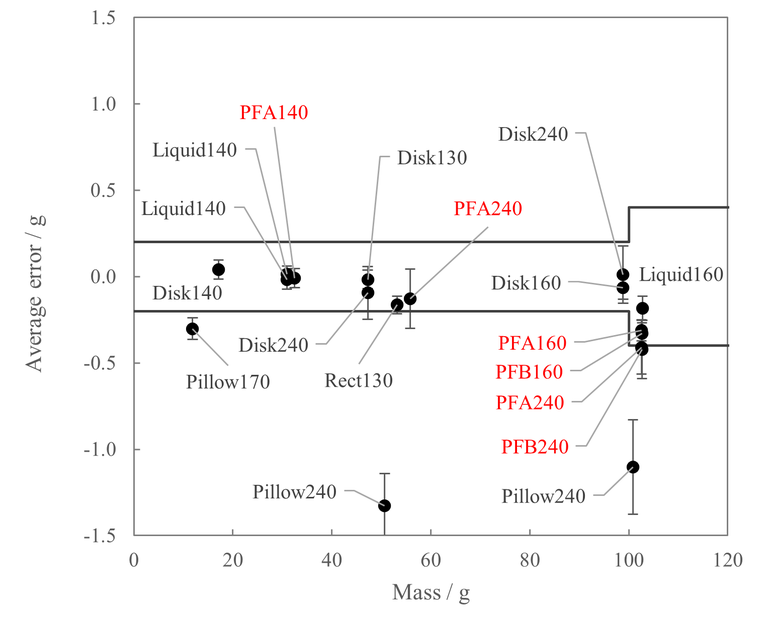
Figure 3(a). Experimental results (mean error)
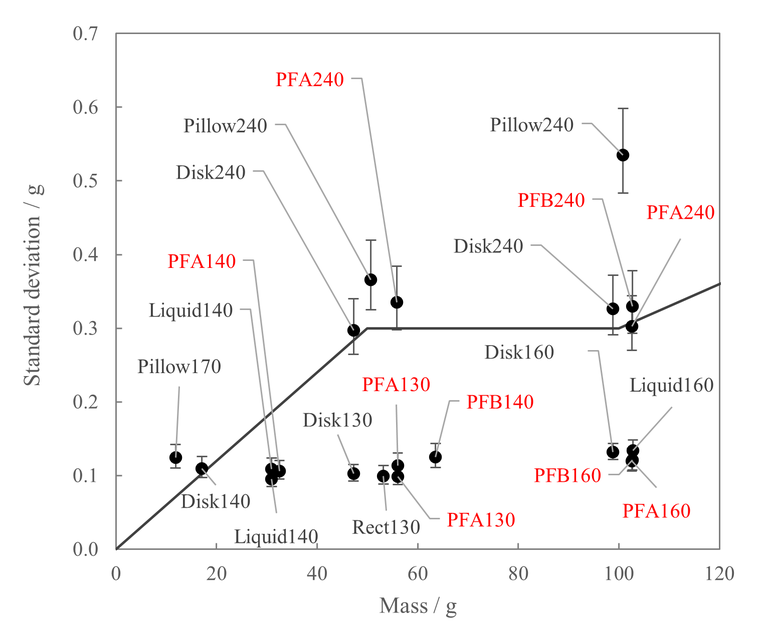
Figure 3(b). Experimental results (standard deviation of error).
The labels in the figures are used as follows:
- Rect: actual box-shaped product
- Liquid: actual liquid-filled package
- Pillow: actual pillow-shaped package
- Disk: disk-shaped reference test load
- PFA: box-shaped Pseudo Fundo (Figure 1)
- PFB: frame-shaped Pseudo Fundo (Figure 2)
For box-shaped products and liquid-filled packages, Pseudo Fundo produced weighing results that were nearly identical to those obtained with the actual products. This demonstrates that Pseudo Fundo can serve as a suitable substitute for these types of products during verification testing.
In contrast, noticeable differences were observed for pillow-shaped packages filled with inert gas, such as nitrogen. Such packages may experience aerodynamic lift while moving along the conveyor, causing the measured weight to become smaller than the true weight. Because of their low apparent density, they are more susceptible to this effect.
The standard deviation of error was also greater for pillow-shaped packages than for Pseudo Fundo. Two factors are considered responsible:
- The contents inside the flexible package shift during repeated weighings, causing the center of gravity to change.
- Small variations in aerodynamic lift due to airflow around the package lead to fluctuations in the measured weight.
Conclusions and Future Work
In this study, the alternative test load Pseudo Fundo, developed by JMIF, was evaluated by comparing its weighing performance with that of actual packaged products using an automatic catchweigher. The evaluation was based on the mean error and the standard deviation of error defined in OIML R51.
For box-shaped products, Pseudo Fundo produced results comparable to those of actual products, whereas differences remained for pillow-shaped packages.
Although Pseudo Fundo cannot yet replace actual products for every application, the present results demonstrate that it is a practical substitute for certain types of packaged products. Since using actual products in verification tests often presents hygiene and cost-related challenges, Pseudo Fundo offers a promising solution.
Furthermore, reducing the need to consume commercial products during testing contributes to the reduction of food waste, making this approach significant from a sustainability perspective. Future work will focus on further improving and expanding the applicability of Pseudo Fundo.
Reference
[1] OIML R 51-1:2006, Automatic Catchweighing Instruments – Part 1: Metrological and Technical Requirements – Tests. Available from https://www.oiml.org/en/publications/recommendations