OIML BULLETIN - 2026 - VOLUME LXVII - NUMBER 4
f o c u s p a p e r
National Metrology Systems in the Asia-Pacific region: Practices and future outlook
APLMF/OIML Seminar on OIML D 1 "National Metrology Systems"
Guo Su  1, Chingis Kuanbayev 2, Jaco Marneweck 3, and Tsuyoshi Matsumoto 4
1. NIM  , China
2. BIPM
3. National Regulator for Compulsory Specifications, South Africa
4. NMIJ , Japan
Citation: S. Guo et al. 2026 OIML Bulletin LXVII(4) 202604xxsu
1. Background
In an era of rapid globalization with scientific and technological advancements, accurate, consistent, and internationally recognized measurement results have become a cornerstone for supporting fair trade, public safety and health, fostering scientific and technological innovations, addressing climate change, and advancing the United Nation’s Sustainable Development Goals (SDGs).
As a core component of the National Quality Infrastructure (NQI), a well-functioning national metrology system depends on seamless integration of principles, practices of measurement science, and legal metrology activities. This system’s effectiveness, aligned with national strategies and societal needs, directly influences the entire effectiveness of an economy, as well as its international competitiveness in the global market.
Recognizing the importance of delivering a coherent and unified global metrology framework, the International Organization of Legal Metrology (OIML) and the Bureau International des Poids et Mesures (BIPM) continue to collaborate closely, striving to present “one voice” for metrology to the wider world. The Asia-Pacific Legal Metrology Forum (APLMF) has supported this activity as a Regional Legal Metrology Organization (RLMO).
Informative references to the global or regional metrology framework were provided in the OIML publications [2-10]. Among them, the articles of the OIML Bulletins [4-9] refer to the metrology systems and initiatives in the APLMF member economies.
A key outcome of this collaboration led to the joint publication, OIML International Document D 1:2020 National Metrology Systems – Establishing Institutional and Legal Framework [1]. Drawing on decades of international best practices and consensus, OIML D 1 provides guidance to national authorities on developing national metrology systems, establishing metrology institutions within their jurisdictions, and formulating metrology-related legislation. The document serves as a ‘toolbox’ and a ’roadmap’ for policymakers, legislative bodies, and metrology authorities seeking to strengthen institutional, technical, and legal foundations.
In this context, to promote regional coordination and mutual recognition by understanding and effectively applying the OIML D 1, the APLMF and the State Administration for Market Regulation of the People's Republic of China (SAMR) co-hosted this thematic seminar in Shanghai, China, from 26-27 November 2025.
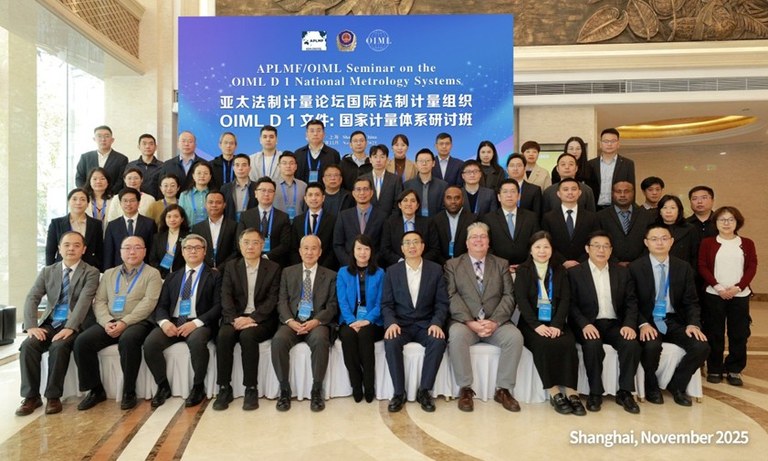
The seminar aimed to establish a high-level international platform for the exchange and sharing of experience across different stages of development, for discussing common challenges and opportunities, and thereby contributing to deeper Asia-Pacific regional cooperation in metrology.
2. Purposes and Objectives
The overall objective of this seminar was to deepen the understanding of OIML D 1 and the national metrology system’s concept defined therein, including its legal, institutional, and policy dimensions, among the member countries and economies in the OIML and APLMF, and to promote its application in practical work. Specific objectives included:
- Provide expert interpretation to ensure representatives from diverse economies fully understand the strategic value, core principles, and framework of OIML D 1.
- Exchange successful cases, current practices, and specific difficulties faced by the economies in metrology legislation, institutional setup, policy formulation, resource allocation, and international cooperation.
- Reach a regional common understanding on how to effectively implement OIML D 1 and strengthen the key elements of national metrology systems in response to the new challenges to society (such as digitalization and green transition).
- Explore how OIML D 1 can be implemented across diverse economies and draft a best-practice guide that could be used for its practical implementation.
3. Organization and Process
3.1 Organizational Structure
The seminar was planned by the Working Group on Metrology Control Systems (WG-MCS) under the APLMF, led by Mr. Guo Su, the WG Chair from the National Institute of Metrology, China (NIM). The seminar received full support from the APLMF Secretariat, OIML, and BIPM. Remarkably, it was the first APLMF training event attended by a BIPM expert. As the host, the SAMR, together with co-organizers, the Shanghai Municipal Administration for Market Regulation and Shanghai Institute of Measurement and Testing Technology Co., Ltd. (SIMT), jointly undertook the organization and logistics support of the seminar. The host provided the Pearl Hotel in the heart of Shanghai as the venue for this event.
3.2 Participants
The seminar brought together senior officials and experts from BIPM, OIML, and the APLMF Secretariat, and representatives from legal metrology authorities and national metrology institutes from the nine economies (Brunei Darussalam, Cambodia, China, Indonesia, Malaysia, Papua New Guinea, Singapore, Thailand, and Vietnam), and it was attended by a total of more than 50 participants. Diversity of the participants ensured the breadth and depth of the experiences exchanged during the seminar.
3.3 Meeting Format and Agenda
The seminar content was delivered in a logical sequence for two days, starting with the international metrology framework presented in the OIML D 1 and progressing to the adoption of its recommendations in different countries through case studies in the separate sessions in the four groups. During these sessions, the participants discussed best practices on how to implement the OIML D 1’s recommendations.
3.3.1 Opening Ceremony
On Wednesday, 26 November, the seminar was kicked off with an opening ceremony. Mr WANG Yiyang (Deputy Director General, Shanghai Municipal Bureau of Market Regulation), Mrs ZHENG Huaxin (Assistant Counsel, SAMR), and Dr Tsuyoshi MATSUMOTO (APLMF Training Coordinator) provided opening addresses.
3.3.2 Keynote Lectures on International and National Metrology Frameworks
Experts from BIPM and OIML introduced OIML D 1 and the global metrology system framework. Mr Jaco MARNEWECK (National Regulator for Compulsory Specification, South Africa) presented the role and structure of the OIML and regional organizations, such as the AFRIMETS (Intra-Africa Metrology System), and highlighted their contributions to global coordination in legal metrology. Mr Chingis KUANBAYEV provided an overview of the mission of the BIPM. Focusing on the OIML D 1 brochures and the e-learning course jointly developed by BIPM and OIML, he explained the concept of national metrology systems, government policy options, and the core roles of the CIPM MRA (Mutual Recognition Arrangement of the International Committee for Weights and Measures) in ensuring the global mutual recognition of measurement results. Subsequently, Dr Tsuyoshi MATSUMOTO described the evolution and core structure of OIML D 1, with particular emphasis on national metrology systems as part of National Quality Infrastructure, as well as the role of the APLMF for promoting regional cooperation and capacity building in legal metrology.
3.3.3 Case Studies on National Practices
Chinese experts provided localized case studies in-depth based on the ongoing practice for revising the Metrology Law. With the theme "Revision of China's Metrology Law and Its Comparison with OIML D 1", Mr HAN Jianping (SAMR) systematically compared the structure and content of China's current Metrology Law with the Model Law in Appendix B of OIML D 1. He detailed the comparison results regarding the background, principles, revisions for reducing administrative licensing and strengthening international cooperation, reformation of the market’s economic system, transformation of government functions, development of science and technology, and provision of a reference for other economies using OIML D 1.
This presentation was followed by the theme "The Legal Status of National Metrology Institutes" provided by Mr YU Lianchao (NIM). He discussed the fundamental position of metrology in national quality infrastructures in many countries from the constitutional level, then focused on how China's Metrology Law had established the statutory function of the NIM as the highest basis for the unified physical quantities, and then explored possible implementation models for maintaining, such as internal governance, authorization system, and public-private cooperation.
These two reports together constituted a comprehensive picture from comparison of the top-level legal frameworks and functions of core implementing institutions. They provided participants with profound and relevant insights into localized implementations.
3.3.4 Economy Reports
The reports on national metrology systems from the participating economies highlighted a set of common challenges shared across the Asia-Pacific region, while also underscored significant opportunities for coordinating progress in metrology. Some economies were in the process of updating or modernizing legislative and institutional frameworks to better respond to emerging technologies such as electric vehicles, smart metrology, and digital services. In parallel, several economies were undertaking broader systematic reforms or transformations of their governance models.
Across the region, the participants recognized the needs to strengthen technical infrastructure, upgrade national measurement standards, enhance measurement traceability, and further develop highly skilled professional capacity. Additional areas for improvement included market surveillance for law enforcement, public awareness of metrology, and practical methods for regulating modern measuring instruments that incorporate software and Internet of Things (IoT).
Common priorities identified by the economies included budgetary constraints, effective use of regional and international cooperation mechanisms, and adaptation to the digitalization and intellectualization accelerated in metrology.
3.3.5 Group Discussions (Core Session)
All participants were divided into four parallel groups to conduct in-depth and focused discussions on six core topics covered by the BIPM-OIML-D1 Inserts [11],[12], with the cover page shown in Figure 1. Each group was guided by one of the coordinators: Mr Chingis Kuanbayev, Mr Jaco Marneweck, Dr Tsuyoshi Matsumoto, and Mr Guo Su. The details are reported in section 4.
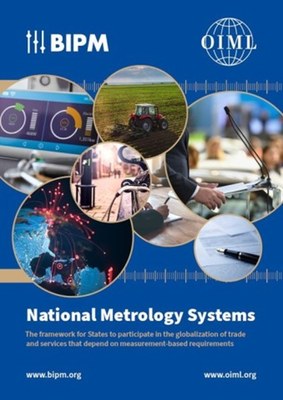
Figure 1. BIPM-OIML-D1 inserts.
3.3.6 Technical Visit
A technical visit was organized on the afternoon of 27 November at the SIMT campus, guided by its professional staff. The participants toured the institute’s facilities to gain an overview of its metrology infrastructure and technical capabilities, including legal metrology services.
4. Discussion and Outcomes
Group discussions were organized to enable all participants to share their practical experiences in establishing national metrology systems and implementing the OIML D 1’s recommendations. Participants discussed and identified best practices that could serve as guidance for the economies that were reshaping, or planning to reshape, their national metrology systems.
It was recognized that there were no universally ’good’ or ‘bad’ models for national metrology systems, as their design and implementation could be inherently influenced by each economy’s fundamental climatic, geographical, institutional, and cultural conditions.
Through the discussions, the groups identified key “Dos and Don’ts” to be applied when they reshape their national metrology systems. The following clauses (4.1 to 4.6) summarize the discussions on the six topics corresponding to the BIPM-OIML-D1 Inserts [11], [12].
4.1 The role of government in a National Metrology System
4.1.1 How do economies build a "policy-institution-supervision" trinity government governance framework to implement the requirements of OIML D 1?
The participants agreed with three policies.
- At the policy level, national policies should be clear and forward-looking, supported with a sound national infrastructure on metrology and a "metrology-driven" development strategy. The policies should align closely with the principles of OIML D 1 and national development plans. A three-tier legislative system of "law-regulation-standard" helps to transform the OIML publications into domestic normative document Mechanisms for coordinating national metrology activities should be in place to ensure a uniform application of the law on metrology.
- At the institutional level, it is important to establish a metrology system supported by the NMI that is responsible for developing and maintaining the national measurement standards and disseminating the International System of Units (SI). Ideally, a single NMI would serve as the national focal point for measurement science, providing leadership to nationwide and worldwide cooperations in In some economies, however, NMI’s functions may be distributed among multiple institutes. Under such arrangements, central administrative authorities may designate several specialized metrology institutes to develop and maintain the national measurement standards within their respective fields, to be operated collectively as part of a coordinated system. In such cases, effective coordination mechanisms should be in place to ensure consistency, coherence, and efficiency across all participating institutes.
- At the administrative level, it is necessary to establish a closed-loop supervision system covering the entire life cycle of measuring instruments and strengthening market supervision for law enforcement. Where a digital supervision tool, which operates flexibly and dynamically on a risk basis, could be explored to adapt efficiently to technological and market changes.
4.1.2 How do governments balance the investment of public metrological resources and the role of market mechanisms to ensure the sustainable operation of the metrological system?
The participants identified three core outcomes:
- Firstly, it was clarified that government investments should focus on the basic public welfare, giving priority to metrology infrastructure related to public interests, such as medical care, fair trade, and environmental monitoring. The investments should also support metrology capacity building in the strategic areas for emerging technologies, such as electric vehicle supply equipment (EVSE) and renewable energies.
- Secondly, it was advocated to introduce innovative, financial, and operational models by means of; (1) guiding private capital to participate in regular calibration, testing, and other services through the Public—Private—Partnership (PPP) model; (2) promoting metrology institutions to broaden funding sources through market-oriented services and industrial cooperation projects; and (3) separating roles of management and operation to allow NMIs to focus on strategic and basic tasks while providing regular services for the market.
- Thirdly, it was recognized that there was a need for the participation of private agencies/laboratories, supplementing government capabilities through accreditation or authorization, especially in the field of industrial metrology and legal metrology. At the same time, it would be necessary to establish supervision mechanisms with a strict qualification review to prevent conflicts of interest and ensure the impartiality of their services.
4.1.3 How to resolve cross-cutting application issues of metrology in trade, health, environment and other fields through inter-departmental coordination?
The participants’ consensus focused on three major directions:
- Firstly, establish a legal coordination mechanism in metrology by means of; (1) setting up a permanent coordination platform composed of cross-ministerial representatives; (2) holding regular consultations to formulate cross-cutting technical specifications and policies; and (3) clearly defining the leading and supporting departments for the metrology issues involving cross-cutting fields to avoid ambiguity in responsibilities.
- Secondly, strengthen sharing of technical information by means of; (1) promoting cross-departmental formulation of universal technical specifications; (2) establishing a database of national metrology information for the supervision by various departments; and (3) sharing the laboratories’ resources to improve coordination efficiency.
- Thirdly, clarify key practical principles for measurement, through unifying the technical requirements for the common physical quantities used across different application fields to eliminate conflicting measurement Meanwhile, experiences from some economies, such as the China and Vietnam, can be learned, where a central metrology authority takes the initiative in establishing an efficient process for inter-departmental cooperation.
4.2 International aspects of National Metrology Systems
4.2.1 How do economies enhance the international mutual recognition of their metrological systems by participating in international/regional organizations (e.g., OIML, BIPM, APLMF, APMP)?
- Firstly, the participants agreed that in-depth participation in international activities was a basic path for mutual recognition, and all economies should actively strive for maintaining membership in key international and regional organizations, such as OIML, BIPM, APLMF, and APMP. Moreover, the importance of experts’ contributions to substantive tasks, such as OIML Technical Committees’ work for drafting and revising International Recommendations, was highlighted.
- Secondly, active engagement in international mutual recognition systems was emphasized, including participations in the CIPM MRA with declaration of Calibration and Measurement Capabilities (CMCs), proficiency testing activities, international comparisons, and the OIML-CS (Certificate System of the OIML). At the same time, effective use of regional platforms provided by, such as APLMF and APMP, was highlighted, particularly for regional comparisons, proficiency testing, and training in legal metrology to reduce the costs and technical barriers to mutual recognition.
- Thirdly, enhancing international trust was identified as a core goal. Incorporation and effective implementation of the OIML Recommendations into domestic laws and regulations were emphasized.
4.2.2 How to integrate international mechanisms such as OIML-CS and CIPM MRA into national metrological regulations and practices?
- The participants highlighted the need to advance integration of the international mechanisms across multiple dimensions, including legal, technical, and management aspects. At the legal and policy level, it was emphasized to include the core principles of OIML-CS and CIPM MRA into the revision of framework laws, such as the Law on This procedure would enable internationally-recognized certificates, including technical data, be granted to verify domestic legal equivalence to be utilized for administrative and regulatory activities, such as type approval, verification, and calibration.
- At the technical and management level, it was considered necessary to establish a fast-track mechanism for incorporating international standard This arrangement would give priority in transforming OIML International Recommendations into national regulations and leading prompt implementation in key fields. NMIs’ participation in the CIPM MRA would lead to the establishment of a unified national measurement traceability chain directly connected to the International System of Units (SI). Participants also encouraged that the NMIs’ functional processes should be adjusted to ensure that daily work would comply with the norms required by the OIML-CS and CIPM MRA.
4.2.3 How can small and medium-sized economies achieve international metrological cooperation and mutual recognition with limited resources?
The participants indicated diverse and differentiated development in each economy and proposed the following recommendations.
- Firstly, identify the strategic focus(es) of the economy and concentrate the resources on key measurement fields that are crucial to the economy, trade, and public welfare. This policy helps the economy participate in the international mutual recognitions in these fields. Choose a flexible model according to the available resources, such as participating in an international organization as an associate member to obtain technical information and services at low costs.
- Secondly, leverage international/regional platforms and assistance, g., make full use of capacity building/training programs and inter-comparison projects provided by such organizations. At the same time, take the initiative to seek bilateral technical assistance and equipment support from advanced economies, ensuring sustainable domestic budget investments.
- Thirdly, employ innovative international/regional schemes, such as participating in technical working groups in specific fields, using digital platforms of international organizations to carry out remote work with low costs, and sharing the resources of other leading laboratories for maintaining primary standards, avoiding duplication through agreements.
4.3 Assessing metrology needs that support national priorities
4.3.1 How do different economies determine metrological priority areas by combining their own industrial structures (e.g., manufacturing, agriculture, tourism)?
The participants encouraged building a mechanism for field identification and a multi-party collaboration in line with these policies.
- Firstly, key economic and social sectors should be accurately identified, with priority given to pillar industries that contribute significantly to the local GDP and exports. These priorities should align with the strategic national development goals, such as food safety and the transition to green energ At the same time, they should address metrology needs in emerging industries, including electric vehicles and smart medical devices.
- Secondly, stakeholders’ collaboration should be strengthened by collecting front-line needs through regular communication with industrial associations and relevant ministries, and by clarifying the metrology capabilities required in accordance with the targeted export markets and domestic supervision requirements.
- Thirdly, the scientific basis for assessment should be ensured through the use of appropriate technical tools. Technical roadmaps for industry should be jointly formulated to clearly define the key metrology needs, taking account of the required precision goals in each field.
4.3.2 How do economies conduct gap analysis between existing metrological capabilities and the needs of priority areas?
The participants developed a systematic assessment process and reached a consensus on its application. The process should include five core steps:
- First, demand mapping: clarifying specific standards for each priority field in terms of measurement parameters, precision, and compliance to regulations;
- Second, capacity inventory: assessing comprehensively the existing capabilities of NMIs in terms of personnel, equipment, and standards;
- Third, gap identification: comparing the needs and capabilities, item by item for each of the target fields, whether they are fully covered, partially covered, or missing;
- Fourth, priority ranking: classifying the fields based on gap factors, such as national strategic importance and economic impact; and
- Fifth, continuous iteration: evaluating regularly the effect of a small improvement to form a closed-loop improvement scheme.
At the same time, it was proposed to utilize analytical and benchmarking tools for collecting feedback from stakeholders. The tools could include a national survey, benchmarking with reference to the international documents, feedback from another economy with a similar experience, and a demand database with dynamic tracking.
4.3.3 How to engage stakeholders such as industry, academia, and research institutions in metrological needs assessment to ensure alignment with practical realities?
The participants identified three major initiatives.
- Firstly, formal participation platforms should be established, with regular national metrology forums, thematic working group meetings, etc., to provide fixed communication channels for multiple parties. At the same time, the membership should be reserved for industry and academic representatives, including qualified institutions, such as the national metrology coordination committees, to ensure that their opinions are fully considered at the policy level.
- Secondly, cooperation in specific fields should be enhanced. Encourage metrology institutions to carry out joint research on cutting-edge measurement technologies in cooperation with universities and specialized research institutions. Invite industry experts to provide consulting on technical issues. For key industries such as pharmaceuticals and automobiles, establish industry-metrology committees, composed of enterprises, metrology institutions, and experts, to accurately align with industry’s
- Thirdly, the scope of participation should be broadened. Public consultations should be conducted during the process for formulating and revising metrology policies and regulations to absorb opinions from social sectors, such as consumer groups. In addition, in-depth understanding and collaboration among metrology institutions, industry, and academia should be promoted through talent exchange mechanisms such as joint training and internships.
4.4 Policy implementation options for governments
4.4.1 How do economies select a metrological institution setup model (e.g., single NMI/distributed system) suitable for their national conditions?
The participants reached a consensus that approaches should be based on national conditions and needs.
- They agreed that there was no unified model, and the core policy lay in effective balancing between resource utilization and service coverage requirements.
- For small and medium-sized economies with concentrated needs, a model with a single centralized NMI would make use of the resources efficiently and facilitate participation in the international mutual recognition.
- For large economies with vast territories and scattered industrial distribution, a distributed model composed of an NMI plus regional/professional institutions could be adopted to improve service coverage and response to the customers.
- For economies with extremely limited resources but prominent specific industries, a model with a government supervision plus industry-led support could be explored, relying on the measurement capabilities of leading industry enterprises or private laboratories, with the government focusing on coordination and supervision.
- Regardless of the above models, it was necessary to clarify the legal responsibilities, affiliation, and collaboration mechanisms for the institutions, and ensure a sole official representative to the international affairs. At the same time, conflicts of interest should be prevented between functions, such as standard setting and supervision.
4.4.2 How to establish an effective metrological policy coordination mechanism and stakeholder participation channels?
The participants emphasized the importance of building a multi-level coordination framework and enriching participation mechanisms. The coordination framework should cover the following three levels:
- The top level is the cross-ministerial national metrology coordination committee, responsible for formulation and coordination of the major strategic policies;
- The middle level is composed of the technical committees and industry working groups, undertaking the demand-based formulation of specific technical specifications; and
- The implementation level is the regular bilateral cooperation mechanism among metrology institutions, local governments, and enterprises.
They also noted that participation channels needed to be institutionalized, with mandatory solicitation of stakeholders’ opinions during the drafting of policies and regulations, through regular seminars and exchange activities. At the same time, they recommended using digital tools to build an online suggestion platform, tracking policy implementation effects through big data analysis, and ensuring the pertinence and responsiveness of the policies and regulations.
4.4.3 How to design a sustainable funding model for the metrological system to balance public interests and market efficiency?
The participants discussed and clarified the framework of government guarantees for diversified supplements.
- Firstly, they agreed to strengthen the government's responsibility for basic guarantee. The government should make stable and long-term budgetary commitments to cover the basic operation of NMIs, including obligations for international organizations and public welfare in metrology, while providing personnel’s
- Secondly, the government should allow diversified funding sources for supporting metrology institutions to secure income through market-oriented services, such as calibration, testing, and technical consulting. The government should also allow reasonable alternative schemes with transparent financial systems, g., R&D project funding from the industry, equipment support for jointly-built laboratories, and encouragement of beneficiary industries to invest capacity building.
- Thirdly, they discussed innovative financing and cost-controlling Information technologies should be used to achieve a full process for refined budget management, implementing classified management by distinguishing between public welfare and market-oriented services. The design of funding models should take into account the long-term nature of the national metrology system, including financial arrangements for continuous capacity building for the personnel, periodic updates of laboratory’s equipment , and technological upgrades to ensure the sustainable development of the entire system.
4.5 Legislating for metrology
4.5.1 How do economies build a hierarchical metrological legislative system of "law-regulation-standard" that meets the requirements of OIML D 1?
The participants reached a consensus on the hierarchical design as follows.
- The first level consists in the basic law, namely the Law on Metrology or an equivalent legislation. It clarifies the core principles of metrology, government responsibilities, institutional frameworks, basic systems, and legal liabilities. The content should be stable and not easily modified.
- The second level consists of administrative regulations and departmental rules, formulated by the central government or ministries in accordance with legal authorization. These regulations describe operational content, such as catalogues of measuring instruments subject to management, type approval procedures, and market supervision rules.
- The third level consists of technical standards and specifications, issued by metrology authorities. They specify detailed technical content such as specific measurement methods, equipment technical requirements, and calibration procedures. This level should be flexible to quickly keep up with changes in international standards and technological advancements.
At the same time, the participants emphasized the need to ensure the consistency of the system. They proposed that lower-level laws should strictly follow the principles of higher-level laws, and the procedures for formulating, revising, and repealing regulations should be clearly defined to avoid conflicts at all levels.
4.5.2 How to balance the mandatory and flexibility of metrological legislation to adapt to technological changes and industrial development?
- The participants agreed that mandatory requirements should be strictly limited to core public interest fields such as public safety, health, environmental protection, fair trade, and national measurement unification. The scope of the mandatory requirements should be clearly defined and dynamically adjusted through a catalogue of measuring instruments under control.
- The flexiblility could be reserved through three approaches: (1) stipulate only core principles and authorization clauses in basic laws, and leave other details to lower-level regulations and standards to facilitate rapid updates; (2) encourage market-oriented voluntary mechanisms for non-mandatory fields, supporting quality assurance through calibration and laboratory accreditation; and (3) establish a dynamic evaluation mechanism for regularly adjusting the scope of mandatory and voluntary requirements.
- At the same time, a goal-oriented and performance-based legislative system should be adopted flexibly to avoid impeding technical Regulatory authorities should be authorized to establish rapid response mechanisms to deal with new technologies and respond to emergencies.
4.5.3 How to clarify metrological law enforcement powers, penalty standards and dispute resolution mechanisms in legislation?
- Laws should clearly define law enforcement powers, scope of responsibilities, bodies responding to violations, and collaboration mechanisms for the central/local regulatory authorities.
- Establish a tiered system for penalties and a mechanism for resolving disput Set differentiated penalties, such as warnings, fines, confiscation, and revocation of licenses, according to the nature and consequences of the violations. The fines should be dynamically adjusted by lower-level regulations. Adhere to the procedures enforced by law for education and corrective actions, while giving a reasonable time to minor or first-time violations. Establish diversified dispute resolution channels, clarifying the applicable procedures, including administrative mediation, reconsideration, arbitration, and judicial litigation.
- Set a reasonable grace period to give industries time to adapt to new editions or major adjustments to laws and regulations for ensuring smooth implementation of the
4.6 Developing a metrology system for the future
4.6.1 How do economies respond to technological changes such as digitalization and the Internet of Things to upgrade their metrological systems in line with the "future-oriented" requirements of OIML D 1?
- At the strategic level, it is necessary to incorporate digital metrology into the planning of the national quality infrastructure and the building of a framework compatible with digital measuring instruments, remote calibrations, and AI (artificial intelligence) algorithm verification.
- At the technical level, it is necessary to actively adopt digitalized international standards, develop new testing methods, such as virtual testing and software verification for smart sensors, IoT devices, and AI-based measurement systems. In addition, formulate metrological supervision rules targeted the e-commerce field.
- At the process level, it is necessary to establish a new mechanism for collecting feedback from the entire links of trend analysis, risk assessments, capacity building, and updates in standard. At the same time, deepen cooperation with manufacturers, technical enterprises, and academia to jointly explore solutions to technological changes.
4.6.2 How to build a metrological talent training system to support the development of future metrological technologies and practices?
- The training framework should cover basic training, professional training, and special training for cutting-edge technolog Its content should consolidate metrologist understand basic knowledge in metrology, associated regulations, and the International System of Units (SI). It also strengthens technical capabilities in various professional fields, keeping up with cutting-edge technologies, such as new sensors, data analysis, and the application of AI in metrology.
- Innovations in training could yield many outcomes, such as; (1) building a pool of talent for the national metrology system, (2) deepening cooperation among NMIs, industry, and universities; (3) designing a dual career path for both technical experts and management experts; (4) promoting international training participated by the personnel with good communication skills and ability for knowledge transfer in the economy; and (5) establishing an award/honour system to encourage talent contributions.
4.6.3 How to integrate the Sustainable Development Goals (e.g., energy efficiency, environmental monitoring metrology) into the metrological system?
- At the strategic level, it is necessary to clarify priority fields for green metrology in the national development plan, such as carbon accounting, energy efficiency assessment, and environmental monitoring. Metrology requirements should be embedded into the laws and regulations related to energy management and environmental protection.
- At the technical level, it is necessary to build traceable national measurement standards and appropriate CMCs for key parameters in the fields, such as carbon emissions, pollutant concentrations, and energy If necessary, formulate or transform relevant technical standards and operating procedures.
- At the evaluation level, relevant national institutions should continuously monitor the quality of measurement data to ensure sustainable development. They should also regularly evaluate the effects of various green metrology projects and regulations to ensure alignment with the SDGs.
5. Conclusions
This seminar successfully reached a series of important conclusions.
First, the significant value of the OIML D 1 was recognized by all participants. It was agreed that this document would provide an authoritative, practical, modular, and systematic framework for diverse economies when they review their current metrology systems and plan future development to establish a solid foundation for optimizing the national metrology systems across the region.
Second, it was found that experiences in the Asia-Pacific region were rich and complementary to each other. Participants noted that economies in this region formed diversified practical models adapted to differences in development stages, industrial structures, and available resources. The experiences and lessons learned by participating economies provided important reference for other economies, especially in inter-departmental coordination, institutional setup, and the integration of metrology into national development strategies.
Third, deepening of regional cooperation was identified as the key path for common development. Faced with common challenges, such as technological changes and a lack of resources, participants reached a consensus that the Asia-Pacific region could continuously strengthen the regional metrology system only by enhancing cooperation under the regional platforms, such as APLMF and APMP, relying on their mechanisms for assistance, knowledge sharing, capacity building, and mutual recognitions.
Fourth, it was recognized that the reform and development of the metrology system should be future-oriented and demand-driven. It was emphasized that the construction of the national metrology system must be closely aligned with the national development strategy, including the path for upgrading industries. The system should accurately respond to the metrology needs from emerging industries and key fields. It should also proactively embrace the wave from digitalization, intelligence, and the SDGs to ensure that the metrology system could always provide effective support for the national economy and social development.
6. Achievements of the Seminar
The seminar successfully achieved its objectives. Concerning the OIML D 1 framework, it conducted in-depth discussions on core issues, such as the balance of government investment, international mutual recognition, public-private cooperation, support for small and medium-sized economies, hierarchical legislations, technological developments, and integration of the SDGs. All discussion groups put forward specific policy recommendations and practical plans, including establishment of policy coordination mechanisms, effective public-private cooperation models, use of digital platforms, and international cooperation to enhance capabilities of the national metrology systems.
The seminar featured in-depth discussions with active participation, which effectively promoted mutual understanding and consensus among participants. Different from the conventional one-way training courses, this seminar was characterized by interactive and lively discussions, with full participation by all members, which were recognized as successful. Through keynote speeches, reports from member economies, and group discussions, the participants had an opportunity for comprehensive and in-depth communications, which significantly enhanced their understanding of the OIML D 1’s framework. All participants from the nine member economies, including China, made substantially valuable comments and suggestions, and they contributed positively to the rich and in-depth discussions.
7. Recommendations for the Future
During the seminar, participants emphasized several priorities to support long-term development of the national metrology systems in the Asia-Pacific region. Based on their suggestions and expressed interests, the following recommendations were identified:
- For APLMF: participants expressed their wishes for a series of targeted and tailored regional training programs, seminars, and expert visit projects, addressing the actual needs from developing economies to help them enhancing their capabilities for constructing a metrology system. They also highlighted the importance of regular seminars on the legislative systems for metrology and suggested the creation of a platform for sharing draft legislative texts, which could serve as a reference for diverse economies in optimizing their systems.
- For OIML and BIPM: Participants indicated interest in forward-looking guidelines or position papers focusing on recent topics such as digitalization in metrology , data credibility, and the application of AI in metrology, for the economies responding to emerging technologies in metrology.
8. Summary
This APLMF/OIML Seminar on the OIML D 1 National Metrology Systems has concluded as a productive regional metrology event. Overall, the organizers have been highly satisfied with the seminar’s outcomes. Participants clearly indicated that they gained valuable knowledge, which would support their work in establishing or reshaping the national metrology systems. It has not only built a platform for knowledge sharing and policy dialogue but also brought together regional experiences on the core elements of national metrology systems, yielding practical recommendations, such as the role of government, international cooperation, and alignment to demands.
The spirit of cooperation and commitment inspired by this seminar has injected a strong momentum into the regional efforts to build a more robust, efficient, inclusive, and future-oriented national metrology system. It will surely play a positive and long-lasting role in upgrading the overall level of the regional quality infrastructure, promoting trade facilitation, and achieving sustainable development.9. References
[1] OIML D 1:2020: National Metrology Systems – Establishing Institutional and Legal Framework
[2] John Birch A.M., OIML E 2:2003: Report: Benefit of Legal Metrology for the Economy and Society
[3] Akira Ooiwa, OIML Bulletin Vol. XLIV No. 2, April 2003, pp. 20-23: Desirable legal metrology framework for the APLMF
[4] Li Dai, OIML Bulletin Vol. XLIV No. 4, October 2003, pp. 33-37: Perspective for China's legal metrology
[5] Herosobroto, OIML Bulletin Vol. LXII No. 2, April 2021, pp. 43-49: Key reforms in the Indonesian Legal Metrology System
[6] WANG Can, ZHENG Huaxin, GAO Wei, and YAN Liuying, OIML Bulletin Vol. LXII, No. 4 October 2021, pp. 45-46: China’s Good Practices in Legal Metrology in Conformity with International Regulations
[7] Cai Changqing, Li Xiaomeng, Chen Hanghang and Zheng Huaxin, OIML Bulletin Vol. LXIII, No. 2, April 2022, pp. 42-47: The implementation of the OIML-CS in P.R. China
[8] Rifan Ardianto, Bonita Oktriana, and Tsuyoshi Matsumoto, OIML Bulletin Vol. LXIV, No. 2, April 2023, pp. 40-46: Control on prepackaged goods within the Asia-Pacific region and challenges faced by the local authorities
[9] Chakra Yodmani, OIML Bulletin Vol. LXV, No. 1, January 2024, pp. 17-19: Chiang Mai Declaration / on the “NEXT Legal Metrology Systems (LMS)”
[10] Tsuyoshi Matsumoto, OIML Bulletin Vol. LXV, No. 3, July 2024: Legal metrology systems in the Asia-Pacific Region
[11] Chingis Kuanbayev and Ian Dunmill, OIML Bulletin Vol. LXV, No. 3, July 2024: BIPM-OIML Joint Knowledge Transfer initiative
[12] BIPM-OIML-D1-Inserts, OIML Website (https://www.oiml.org/en/about/policy-and-legislation/)