OIML BULLETIN - 2026 - VOLUME LXVII - NUMBER 4
e v o l u t i o n
Effect of climatic factors on the metrological performance of instrument transformers and forecasting of measurement-error trends
Zhou Feng1,2, Shao Kui2, Du Bolun1,2, Wang Haiyan1,2, Diao Yinglong1,2 and Wang Huan1,2
1. National Center for High Voltage Measurement  , China
2. China Electric Power Research Institute , China
Citation: Zhou Feng et al. 2026 OIML Bulletin LXVII(4) 202604xx
Abstract
Instrument transformers are important fundamental components for power grid perception and electricity transaction settlement, and their measurement accuracy directly affects power system operation analysis and the fairness of electricity markets. This paper incorporates the regulatory framework of the International Organization of Legal Metrology (OIML) for electrical energy metering applications and measurement traceability, and reviews the metrological performance requirements of instrument transformers, thereby clarifying the regulatory needs for measurement reliability under complex environmental conditions from the perspective of legal metrology management. On this basis, the mechanisms by which climatic factors affect electrical energy metering performance are systematically analysed, the current research status of measurement-error trend forecasting methods is reviewed, the limitations of existing studies are summarized, and future development directions are discussed. Based on field operational data of instrument transformers, the correlation between climatic factors and electrical energy metering performance is investigated, and the effects of different climatic variables on measurement errors and metrological performance are quantitatively evaluated. Furthermore, climatic factors are integrated with historical measurement-error data to establish a measurement-error trend forecasting model, thereby revealing the evolution patterns of measurement errors under complex climatic conditions and enabling effective prediction of their variation trends.
1. Introduction
The sixth assessment report of the Intergovernmental Panel on Climate Change (IPCC) indicates that as global climate change intensifies, extreme weather events such as cold waves, high temperatures, high humidity, heavy rain and floods, and strong winds and sandstorms are showing a trend of frequent occurrence, posing severe challenges to the safe and stable operation of power infrastructure [1]. Organizations such as International Renewable Energy Agency (IRENA) have pointed out that enhancing the climate resilience of the power system is an important direction in the energy transition, and it requires strengthening the ability of power facilities to resist and recover in complex environments through risk assessment, technological innovation, and intelligent management [2]. At the same time, the construction of China's new power system and the development of energy digitalization have also raised higher requirements for the adaptability of power grid equipment to the environment and the intelligent operation and maintenance capabilities. The State Council of China issued the "Measurement Development Plan (2021-2035)" stating: "In response to the measurement needs in complex environments, real-time operating conditions, and extreme environments, research on new methods for value transmission and traceability is being conducted."
Instrument transformers, as important basic equipment for power grid perception and transaction settlement, have measurement accuracy that directly affects the analysis of power grid operation and the fairness of the power market [3]. The OIML’s regulatory framework for instrument transformers mainly covers two aspects: electrical energy metering applications and the traceability of measurement values. OIML R 46-1/-2:2012 Active Electrical Energy Meters stipulates the metrological performance, legal controls, and testing requirements for instrument transformer-operated electricity meters and for their use with external instrument transformers. The OIML "Guide to Calibration" incorporate instrument transformer calibration into the general calibration and traceability system and, together with OIML D 11:2004 General Requirements for Electronic Measuring Instruments, OIML D 31:2019 General Requirements for Software-Controlled Measuring Instruments, and OIML D 14:2004 Training and Qualification of Legal Metrology Personnel, provide supporting measures for measurement equipment, software, and personnel competence.
However, the instrument transformer is mainly designed and calibrated based on standard environmental conditions. Under the long-term influence of complex climatic factors, the insulation performance of the equipment deteriorates and the electromagnetic characteristics change, resulting in drift in power measurement errors such as ratio difference and phase difference, and reducing the state perception and operational reliability of the equipment [4]. At the same time, the traditional maintenance of instrument transformers relies on manual methods, which have problems such as long detection cycles, insufficient state perception ability, and difficulty in timely detection of performance changes. Therefore, it is urgent to utilize online monitoring data and intelligent analysis methods to establish a trend forecast model for the measurement performance of instrument transformers and achieve the transformation from periodic maintenance to state perception and predictive maintenance [5].
This paper first provides an overview of the state-of-the-art research on the influence of climatic factors on the measurement performance of instrument transformers, summarizing the mechanisms by which typical climatic factors such as temperature, humidity, dew point, precipitation, atmospheric pressure, and wind speed affect insulation properties and the evolution patterns of power measurement errors. Next, it outlines the methods for forecasting measurement errors of instrument transformers, analyzing the shortcomings of existing advanced forecasting technologies. Finally, this paper proposes a power measurement error forecast method that integrates quantitative analysis of climatic factors and time series forecast. Specifically, it employs feature contribution analysis to quantify the influence of different climatic factors on measurement performance, revealing the correlation between key climatic factors and the evolution of measurement errors. On this basis, it integrates historical patterns of measurement errors and key climatic factors to construct a time series forecast model, enabling real-time forecast of future trends under complex climatic conditions. This approach provides technical support for equipment condition assessment, intelligent operation and maintenance, and improvement of measurement reliability.
2. Overview of Climatic Factors Affecting the Metrological Performance of Instrument Transformers
As shown in Figure 1, under real working conditions, numerous climatic factors jointly affect the measurement accuracy of instrument transformers, thereby causing abnormal phenomena. This part focuses on the impact mechanisms of climate on instrument transformer measurement capability, reviews the current research status domestically and internationally, and summarizes the existing findings.
Figure 1. Schematic of the effects of climatic factors on the metrological performance of instrument transformers
2.1 Temperature
Italian scholars Mingotti et al. discovered that temperatures at 5°C significantly increase the ratio error and phase error of instrument transformers, with some measured values exceeding the accuracy limits stipulated by IEC 61869 [6]. Chinese researchers Zhuo et al. conducted a temperature cycling test ranging from -40 to 70°C to study the influence of temperature on the measurement performance of instrument transformers. However, due to the limited dwell time at each temperature point, their results could not fully reflect the long-term steady-state effects of temperature [7]. Temperature changes cause parameter drift in components such as capacitors and inductors in the damping circuit, disrupting the original matching relationship and exacerbating power frequency misalignment, thereby causing a secondary output offset of the instrument transformers [8].
2.2 Humidity
Kondalkar et al. from South Korea discovered that increased humidity intensifies the moisture absorption of insulating materials, reduces insulation strength and partial discharge inception voltage, and affects instrument transformer measurement performance via changes in dielectric parameters [9]. At the same time, the high-humidity-induced decrease in surface resistance and increase in leakage current alter the internal current distribution or capacitive voltage division parameters, resulting in a phase displacement of the secondary output [10].
2.3 Solar radiation and wind speed
Studies by Hajidavalloo and Taheri from Iran, and Gorgan from Romania, among others, have shown that solar radiation and wind speed affect the temperature field of instrument transformers and power transformer by altering their heat transfer boundary conditions [11, 12, 13]. Specifically, increased solar radiation raises the heat load, while wind speed modulates convective heat dissipation, thereby causing changes in winding resistance, core magnetic properties, and insulation parameters, which in turn affect the measurement accuracy of the instrument transformers.
2.4 Other climatic factors
Chinese researchers Li et al. pointed out that high altitude and low atmospheric pressure reduce the discharge voltage of instrument transformer external insulation, increase the risk of surface flashover and partial discharge, and thereby affect measurement stability [14]. Indian researchers Waluyo et al. found that the increase in surface leakage current caused by precipitation weakens the performance of silicone rubber external insulation, leading to fluctuations in the measurement output of the instrument transformer [15].
In summary, climatic factors can alter the key operating parameters of instrument transformers through thermal effects, electromagnetic parameter drift, and insulation performance deterioration, thereby affecting measurement accuracy and stability. The main mechanisms are shown in Table 1.
Table 1. Mechanisms through which climatic factors affect the metrological performance of instrument transformers.
| Climatic factor | Principal pathway | Typical metrological effect |
|---|---|---|
| Temperature | Causes parameter drift in the damping circuit, windings, cores, and insulating media, resulting in circuit mismatch | Measurement error and shift in the secondary output |
| Humidity | Causes moisture absorption by insulation, changes in dielectric properties, and increased surface leakage current | Amplitude and phase shifts in the secondary output and reduced metrological stability |
| Solar radiation | Increases thermal loading and alters the internal temperature distribution | Temperature-related drift in electromagnetic parameters and increased measurement error |
| Wind speed | Alters surface convective-cooling conditions and equipment temperature rise | Indirectly affects measurement accuracy and metrological stability |
| Atmospheric pressure/altitude | Reduces the discharge voltage of air and external insulation | Increased risks of partial discharge and flashover, and greater fluctuations in measurement results |
| Precipitation | Wets the external-insulation surface and increases leakage current | Degradation of external-insulation performance and fluctuations in the secondary output |
Under actual operating conditions, no single climatic factor determines the metrological performance of instrument transformers. Instead, this performance reflects the combined and coupled effects of temperature, humidity, solar radiation, wind speed, atmospheric pressure, and precipitation. These factors jointly alter the internal temperature distribution, insulation condition, electromagnetic parameters, and surface leakage current of external insulation, thereby changing the instrument-transformer measurement error. The relationship can be expressed as follows:


where E(t) denotes the instrument-transformer measurement error at time t; [x1(t),x2(t),...,xn(t)] is the meteorological-feature vector comprising temperature, humidity, solar radiation, wind speed, atmospheric pressure, precipitation, and other meteorological variables; xi(t) denotes the i-th meteorological variable; F[X(t)] represents the aggregate relationship between multiple meteorological variables and measurement error; βij is the interaction coefficient between meteorological variables xi and xJ; n is the number of meteorological variables included in the analysis; and represents the effects of load variation, unit-to-unit differences, and other random factors.
3. Review of Measurement-Error Trend Forecasting for Instrument Transformers
With the development of online monitoring technologies and smart grids, a large amount of measurement data has accumulated during instrument transformer operation. Based on historical operational data, trend forecast of power measurement errors has gradually become an important approach for equipment condition assessment and predictive maintenance. According to research methods and technological evolution, related studies can be broadly divided into the following three stages. The research history is shown in Figure 2.
FIGURE 2
Figure 2. Techniques for forecasting measurement-error trends in instrument transformers
Mechanism-based error modelling and online estimation
Early studies mainly constructed error models based on equivalent circuits of instrument transformers, insulation parameters, and multi-device measurement relationships, and combined principal component analysis with wavelet decomposition to achieve drift identification, online error estimation, and anomaly detection. The team from the Politecnico di Milano proposed an online fault detection method for instrument transformers based on the frequency response of instrument transformers and a simplified Volterra model, which supports mechanism-model-driven online state identification [16]. This stage achieved online identification of operating-state errors, but it was still mainly focused on real-time state estimation and did not involve trend forecast of power measurement errors.
Single-model data-driven forecasting
With the accumulation of historical measurement error, research in this field has gradually shifted from online state estimation to data-driven trend forecast, and methods such as support vector regression (SVR), artificial neural networks (ANNs), and long short-term memory (LSTM) networks have been introduced. Chinese scholar Ye et al. preprocessed the operational data of instrument transformers and resampled them at hourly intervals, then constructed a Prophet time series model to achieve trend forecast of instrument transformer measurement errors [17].
Multi-source fusion and hybrid deep-learning forecasting
In recent years, research in this field has gradually shifted from single forecast models to multi-scale signal decomposition and hybrid learning. Mexican scholars Mejia-Barron et al. used Empirical Mode Decomposition (EMD), Ensemble Empirical Mode Decomposition (EEMD), and Complementary Ensemble Empirical Mode Decomposition (CEEMD) to decompose instrument transformer output signals, and extracted features such as Shannon entropy, energy, and root mean square (RMS) from each modal component to assess instrument transformer operating status [18]. Researchers from the China Electric Power Research Institute constructed a state-oriented prediction (SOP) model for instrument transformer measurement performance, and decomposed it into degradation trends and fluctuation components using Variational Mode Decomposition with Mode Decomposition (VMD-MD). They then used a double-Gaussian model and Kolmogorov–Arnold Networks (KAN) for respective forecasts, and realized collaborative forecast of measurement performance trends and fluctuations through component reconstruction [19].
4. Limitations of Existing Research
Current research has advanced the development of instrument transformer measurement performance evaluation in two key aspects: climate influence mechanisms and error trend forecast. However, despite the high-reliability measurement requirements of the new power system, relevant research still has limitations in areas such as multi-factor coupling mechanisms, multi-source feature fusion, and online prediction of power measurement errors, as shown in Table 2.
Table 2. Existing limitations and approaches adopted in this study.
| No. | Limitations of existing research | Approach adopted in this study |
|---|---|---|
| 1 | Most existing studies focus on individual climatic factors, such as temperature or humidity, and lack a systematic analysis of interactions among multiple factors. | Establish a multidimensional meteorological-feature set encompassing temperature, humidity, atmospheric pressure, precipitation, wind speed, and solar radiation to analyse their combined effects on the metrological performance of instrument transformers. |
| 2 | Existing studies mainly provide qualitative analyses of climatic mechanisms and have not established quantitative relationships between individual climatic factors and measurement errors in instrument transformers. | Integrate long-term meteorological data with instrument-transformer measurement-error data and quantify the feature importance of each meteorological variable for error evolution. |
| 3 | Existing measurement-error forecasting methods rely mainly on historical errors and operating data and insufficiently account for persistent climatic influences. | Integrate multidimensional meteorological features with historical error sequences to construct a climate-driven forecasting model for instrument-transformer measurement error, enabling dynamic forecasting of error trends under complex climatic conditions. |
5. Forecasting of Instrument-Transformer Measurement Errors under Climatic Influences and Field Validation
This case is validated based on on-site operational monitoring data from a 220 kV substation. The data collection period spans from 1 September 2024 to 31 August 2025, covering a complete one-year operation cycle. Based on the aforementioned monitoring platform, the measurement error of the instrument transformers are obtained, as shown in Figure 3. At the same time, the climatic data – including diffuse irradiance, dew-point temperature, direct normal irradiance, shortwave irradiance, temperature, humidity, precipitation, wind speed, atmospheric pressure, and direct irradiance – during the corresponding period are obtained to construct a dataset for the correlation analysis between climatic factors and measurement errors.
FIGURE 3
Figure 3. Time series of instrument-transformer measurement error
Analysis of meteorological-feature importance
The method shown in Figure 4 uses importance calculation model to establish a nonlinear mapping between climatic factors and transformer measurement errors. Each climatic variable is extracted as the daily average value, maximum value, information entropy, and permutation entropy to represent its amplitude and fluctuation characteristics. Based on the quantification of model feature importance, the contribution of different climatic factors to error evolution is identified, along with the key climatic variables governing measurement performance variation, thereby providing a basis for feature selection in the subsequent forecast model.
FIGURE 4
Figure 4. Framework for analysing meteorological-feature importance
Figure 5 reports the feature-importance values of the statistical features derived from each meteorological variable. Because no single feature fully represents the overall importance of a variable, the associated values were summed. Table 3 reports the resulting aggregated feature importance.
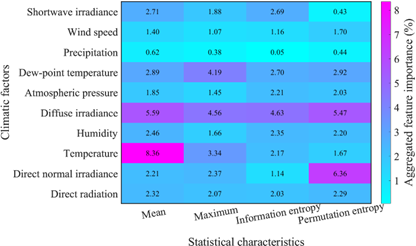
Figure 5. Feature importance of meteorological variables and their statistical features for instrument-transformer measurement error
Table 3 reports the aggregated feature importance of the meteorological variables in the instrument-transformer measurement-error model. Diffuse irradiance had the highest value at 20.24%, followed by temperature at 15.53% and dew-point temperature at 12.69%. This result indicates that the radiant thermal environment, temperature variation, and humidity conditions are the main climatic factors affecting the evolution of measurement errors. Diffuse irradiance alters the internal temperature distribution of the metering equipment, causing electromagnetic parameter drift, while temperature and dew point affect metrological performance through influencing the parameters of windings, cores, and dielectric insulation. In contrast, wind speed and precipitation have lower contributions of 5.33% and 1.50%, respectively, and their effects may be mainly reflected indirectly through convective heat dissipation, ambient humidity, and external insulation surface conditions.
Table 3. Aggregated feature importance of meteorological variables for changes in instrument-transformer measurement error.
| Meteorological variable | Aggregated feature importance |
|---|---|
| Diffuse irradiance |
20.24%
|
| Temperature |
15.53%
|
| Dew-point temperature |
12.69%
|
| Direct normal irradiance |
12.08%
|
| Shortwave irradiance |
7.71%
|
| Humidity |
8.67%
|
| Direct irradiance |
8.71%
|
| Atmospheric pressure |
7.54%
|
| Wind speed |
5.33%
|
| Precipitation |
1.50%
|
Online forecasting of instrument-transformer measurement errors
A forecast model was constructed to take a multivariate time series input that combines historical measurement errors with meteorological characteristics. The features are weighted according to the aggregated feature importance reported above. The forecast model captures long-range temporal dependencies and temporal dynamics and models the relationship between meteorological variation and instrument-transformer measurement error. Figure 6 presents the forecast instrument-transformer measurement errors and their corresponding absolute forecast errors. Table 4 reports the forecasting-performance metrics. The forecasts closely followed the trend in the observed measurement errors. This agreement indicates that the model tracked temporal changes in instrument-transformer measurement error.
According to Table 4, the root-mean-square error (RMSE) and mean absolute error (MAE) between the forecas and observed measurement errors were 0.0011% and 0.0008%, respectively. The corresponding maximum and minimum absolute forecast errors were 0.0045% and 0.000001%, respectively. Figure 6 further shows that every forecast sample had an absolute error below 0.005%. These results indicate good forecasting accuracy and stable performance for the field dataset. They also show that the model reproduced measurement-error dynamics under the climatic conditions represented by this dataset.
Table 4. Performance metrics of the forecasting model.
| Performance metric | Value / % |
|---|---|
| RMSE | 0.0011 |
| MAE | 0.0008 |
| MaxAE | 0.0045 |
| MinAE | 0.000001 |
Figure 6. Forecasting results for instrument-transformer measurement error.
6. Conclusions and Outlook
This study investigates the variation in measurement capability of instrument transformers under complex climatic conditions, analyzing climatic effects and forecasting error trends. A hybrid method integrating quantitative climatic feature analysis with time-series forecasting is proposed. Field validation demonstrates that the method effectively reveals correlations between climatic factors and errors, predicts performance changes, and supports intelligent operation and maintenance.
In the future, advances in foundation models, intelligent agents, and embodied intelligence will further drive instrument transformer assessment toward intelligent cognition and autonomous operation. This is mainly manifested in the following aspects:
(1) Autonomous operation and maintenance based on multimodal foundation models and intelligent agents
By integrating multi-source data (meteorological, monitoring, experimental, and historical data) into a multimodal large model, unified representation and feature extraction can be achieved; combined with intelligent agents, assessment, diagnosis, prediction, and strategy generation can be completed, forming a perception-decision closed loop, and driving operation and maintenance from auxiliary analysis toward autonomous decision-making.
(2) Remote calibration and coordinated health-state sensing through a proposed integration of metrology and communications
By integrating multi-source data such as measurement errors, insulation status, temperature rise, and operating conditions, a generalized metrology-health standard instrument can be constructed; by using the large model to establish coupling mappings of errors and aging, the system can collaboratively achieve remote calibration, performance evaluation, and health diagnosis, forming an integrated evaluation system for calibration and operation maintenance.
(3) Autonomous field operation and maintenance based on embodied intelligence
Integrating robots, inspection equipment, and embodied intelligence enables intelligent collaboration for state detection, inspection, defect identification, and maintenance operations. This promotes the upgrade of operation and maintenance from predictive maintenance to autonomous O&M, effectively supporting the safe and reliable operation of the new power system.
7. References
[1] B. T. Zhou and J. Qian, Changes of weather and climate extremes in the IPCC AR6, Climate Change Research, vol. 17, no. 6, pp. 713–718, 2021.
[2] R. Alfaro-Pelico, U. Lehr, G. S. Seck, et al., Renewable Energy in Climate Change Adaptation: Metrics and Risk Assessment Framework, 2025.
[3] D. Wang, X. Zhang, Y. Li, et al., A study on accurate sensing of intelligent power metering box operation state based on fuzzy inference algorithm, AIP Advances, vol. 16, no. 5, 2026.
[4] P. Mwinisin, A. Mingotti, L. Peretto, et al., Electrical diagnosis techniques for power transformers: A comprehensive review of methods, instrumentation, and research challenges, Sensors, vol. 25, no. 7, Art. no. 1968, 2025.
[5] C. Jiang, S. Xia, F. Zhou, et al., Detecting CVT measurement errors using a voltage online monitoring system and maximum approximate coefficient growth rate, IEEE Sensors Journal, vol. 24, no. 21, pp. 35181–35190, 2024.
[6] A. Mingotti, G. Pasini, L. Peretto, et al., Effect of temperature on the accuracy of inductive current transformers, in 2018 IEEE International Instrumentation and Measurement Technology Conference (I2MTC), 2018, pp. 1–5.
[7] H. Zhuo, Z. Tang, J. Li, et al., Effect of temperature on the output accuracy of electronic current transformer and traditional current transformer, Electrical Measurement & Instrumentation, vol. 55, no. 4, pp. 98–102, 2018.
[8] C. Yang, M. Wu, C. Jian, et al., The stray capacitance on precision of high-voltage measurement, in 2009 IEEE Instrumentation and Measurement Technology Conference, 2009, pp. 249–253.
[9] V. V. Kondalkar, G. Ryu, Y. Lee, et al., Development of highly sensitive and stable humidity sensor for real-time monitoring of dissolved moisture in transformer-insulating oil, Sensors and Actuators B: Chemical, vol. 286, pp. 377–385, 2019.
[10] Y. Yan, X. Ni, J. Jiang, et al., Theoretical analysis and experiment about effect of contamination resistance on accuracy of CVT, High Voltage Apparatus, vol. 45, no. 2, pp. 62–65, 2009.
[11] E. Hajidavalloo and M. Mohamadianfard, Effect of sun radiation on the thermal behavior of distribution transformer, Applied Thermal Engineering, vol. 30, no. 10, pp. 1133–1139, 2010.
[12] A. A. Taheri, A. Abdali, and A. Rabiee, A novel model for thermal behavior prediction of oil-immersed distribution transformers with consideration of solar radiation, IEEE Transactions on Power Delivery, vol. 34, no. 4, pp. 1634–1646, 2019.
[13] B. Gorgan, P. V. Notingher, J. M. Wetzer, et al., Influence of solar irradiation on power transformer thermal balance, IEEE Transactions on Dielectrics and Electrical Insulation, vol. 19, no. 6, pp. 1843–1850, 2012.
[14] G. Li, Y. Zhang, B. Li, et al., The optimization of the current transformer with high-altitude and casting resin insulated, High Voltage Apparatus, vol. 46, no. 4, pp. 57–60, 2010.
[15] M. S. Putra, Influence of mounting incline and natural environmental factors on pin-type silicone rubber insulator leakage currents using internet-based monitoring, IEEE Access, vol. 11, pp. 141997–142014, 2023.
[16] T. Lei, M. Faifer, R. Ottoboni, et al., On-line fault detection technique for voltage transformers, Measurement, vol. 108, pp. 193–200, 2017.
[17] Y. Ye, A. Yang, Y. Wu, et al., Short-term prediction of electronic transformer error based on intelligent algorithms, Journal of Control Science and Engineering, vol. 2020, no. 1, Art. no. 9867985, 2020.
[18] A. Mejia-Barron, M. Valtierra-Rodriguez, D. Granados-Lieberman, et al., The application of EMD-based methods for diagnosis of winding faults in a transformer using transient and steady state currents, Measurement, vol. 117, pp. 371–379, 2018.
[19] B. Du, Y. Diao, F. Zhou, et al., Trend prediction method for capacitive voltage transformer measurement deterioration based on double Gaussian model-KAN fusion, Scientific Reports, vol. 16, no. 1, Art. no. 11785, 2026.